

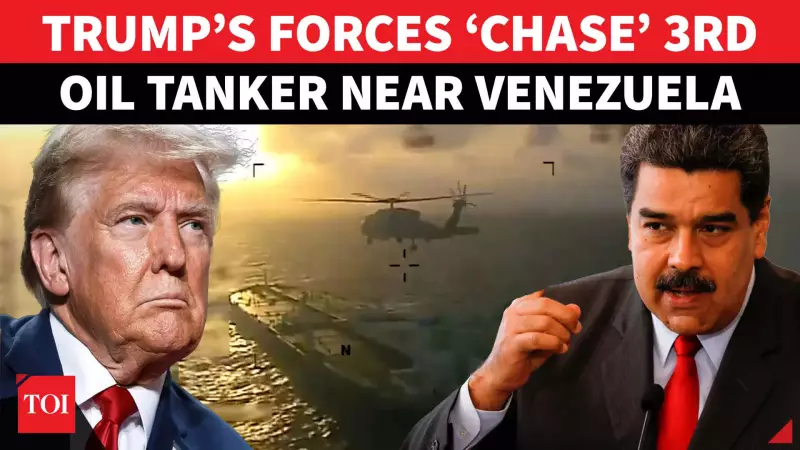
In a significant escalation of maritime enforcement, United States forces are now actively pursuing a third oil tanker in the waters near Venezuela within a span of just two weeks. This latest chase, reported on December 22, 2025, signals a hardening of Washington's campaign to enforce sanctions against the Nicolas Maduro regime by targeting its vital oil exports.
A Widening Net of Enforcement
The pursuit of this third vessel comes mere hours after authorities seized another ship in the Caribbean that was part of the so-called "shadow fleet." This term refers to a network of tankers that often operate with obscured ownership and use tactics like disabling transponders to clandestinely transport oil from sanctioned nations like Venezuela, Iran, and Russia.
According to officials, the tanker currently being tracked is suspected of operating under a false flag and is the subject of a judicial seizure order. While US personnel have not yet boarded the ship, the active pursuit marks a strategic shift. The enforcement effort is expanding beyond reactive seizures to include active interdiction and chase operations in international waters.

The Context of Rising Tensions
This maritime crackdown unfolds against a backdrop of intensifying pressure between the US and Venezuela. The administration of former President Donald Trump, who has taken a consistently hard line against Maduro, appears to be ramping up measures to cripple Caracas's primary source of revenue: oil.
The back-to-back incidents—two tankers chased and one seized in 14 days—demonstrate a coordinated and persistent effort to disrupt the shadow fleet's operations. This fleet has been a lifeline for Venezuela, allowing it to bypass Western sanctions and sell its crude oil to global markets, often at discounted prices.
Implications and Regional Fallout
The aggressive posture of US forces in the Caribbean Sea carries substantial geopolitical weight. It directly challenges Venezuela's economic survival strategy and raises the stakes for any shipping company or nation attempting to facilitate trade with Caracas. The message from Washington is clear: the avenues for circumventing sanctions are being systematically closed.
For the Maduro government, this represents a severe threat. Each intercepted tanker means lost revenue and increased difficulty in funding state operations. The situation also increases the risk of a direct confrontation at sea, which could further destabilize the region.
Observers note that this heightened enforcement activity, occurring near the end of 2025, points to a sustained and possibly escalating campaign. The strategy now involves not just legal paperwork but the tangible, physical presence of US military or coast guard assets to track and apprehend non-compliant vessels.
The coming weeks will be critical in determining whether this show of force successfully deters the shadow fleet or leads to further escalation in the ongoing economic and diplomatic standoff between the United States and Venezuela.






