

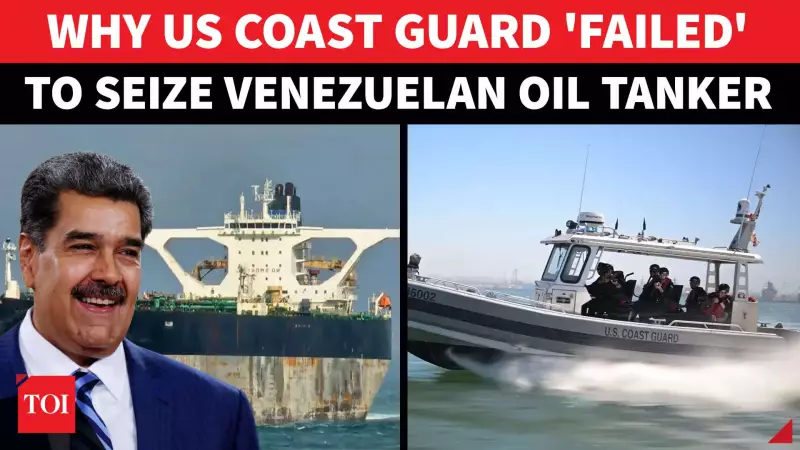
A dramatic high-seas standoff near Venezuela is exposing significant operational challenges for the United States in enforcing its stringent oil sanctions. The U.S. Coast Guard has been forced to hold off on boarding a sanctioned oil tanker, identified as the Bella 1, due to a shortage of available elite forces trained for such high-risk missions.
Operational Limits Exposed in Prolonged Pursuit
The incident, unfolding over several days, highlights a growing mismatch between the ambitious policy directives of the Trump administration and the on-the-ground resources of the Coast Guard. Despite ordering a sweeping blockade of Venezuelan oil shipments, the administration is finding its enforcement capabilities stretched. The Bella 1 tanker has refused requests for boarding, leaving armed Coast Guard personnel in a tense waiting game.
Officials confirm the vessel remains under active pursuit, but have admitted that a successful seizure is not guaranteed. The delay stems from the Coast Guard's dependence on a small number of specialised Maritime Security Response Teams (MSRT). These elite units are specifically trained for dangerous helicopter insertions onto non-compliant ships at sea, and their availability is limited.

Specialised Teams in High Demand
The core of the problem lies in resource allocation. While the policy aims to cripple the Venezuelan oil trade, the Coast Guard's fleet of MSRTs cannot be everywhere at once. This particular mission requires a helicopter-borne insertion onto a moving tanker—a complex operation that standard Coast Guard crews are not equipped to handle.
As the Coast Guard waits for the appropriate team to arrive on scene, the Bella 1 continues its journey, underscoring the practical difficulties of translating sanctions policy into action on the open ocean. The prolonged chase, which began around December 25, 2025, serves as a real-time case study of the logistical hurdles facing maritime interdiction campaigns.
Implications for Sanctions Enforcement Strategy
This event raises critical questions about the sustainability of broad maritime sanctions. The Trump administration's aggressive stance requires constant, global patrols and immediate reaction capabilities. The current situation near Venezuela suggests that the Coast Guard's resources are being tested, potentially creating windows of opportunity for other sanctioned vessels.
Analysts point out that such gaps could weaken the deterrent effect of the sanctions regime. If ship operators believe the chances of interception are low due to force shortages, they may be more willing to risk voyages. The outcome of the Bella 1 pursuit is now being closely watched as a bellwether for the effectiveness of U.S. sea power in economic warfare.
Ultimately, the standoff is more than just a chase; it is a revelation of the complex interplay between foreign policy ambition and military logistics. The U.S. must now reckon with whether its current Coast Guard force structure is adequate for the expansive sanctions enforcement role it has been assigned.






