Foreign Funding to US Colleges Hits Record $5.2 Billion in 2025, Elite Institutions Dominate Inflows
Foreign funding to United States colleges and universities crossed the significant $5.2 billion mark in 2025, according to newly released data from the US Department of Education. This substantial financial inflow highlights the growing global connections of American higher education, but also raises questions about transparency and oversight.
Concentration Among Elite Institutions
More than half of this record-breaking amount went to a small, select group of elite institutions, with Carnegie Mellon University and the Massachusetts Institute of Technology leading the pack. The department's data reveals a striking concentration of foreign financial support among top-tier universities.
According to the department's comprehensive data:

- Carnegie Mellon University received close to $1 billion in foreign funding
- Massachusetts Institute of Technology received approximately $1 billion
- Stanford University received more than $775 million
- Harvard University received over $324 million
Together, these four institutions accounted for a substantial portion of the total foreign funding inflow, demonstrating how global financial support clusters around prestigious American universities.
New Transparency Portal Launched
The US Department of Education has launched a new public portal to track these foreign financial inflows, describing the initiative in an official press release as an effort to "increase transparency and simplify institutional compliance with federal disclosure rules." The portal represents a significant step toward greater visibility into international financial relationships.
Education Secretary Linda McMahon emphasized in the press release that the new portal gives the public "unprecedented visibility" into foreign funding while making it easier for universities to meet their legal obligations. This administrative mechanism focuses on reporting requirements, but its long-term implications may reshape how universities structure their global connections.
Federal Scrutiny Intensifies
Under Section 117 of the Higher Education Act, universities receiving federal funding must report foreign gifts and contracts worth $250,000 or more annually. The Education Department revealed that institutions reported more than 8,300 such transactions in 2025 alone, bringing the total disclosed foreign funding since 1986 to $67.6 billion.
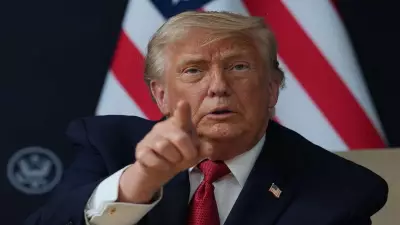
On April 23, 2025, US President Donald Trump signed an executive order titled "Transparency Regarding Foreign Influence at American Universities," which called for tighter monitoring of overseas funding and framed disclosure as a national security issue. This executive action signals a shift in how cross-border academic collaboration is evaluated, with financial flows now treated as both institutional resources and strategic data.
Top Funding Sources Revealed
The department's data provides detailed insight into where this foreign funding originates:
- Qatar emerged as the largest single source, contributing more than $1.1 billion
- United Kingdom followed with over $633 million
- China provided more than $528 million
- Switzerland contributed over $451 million
- Japan supplied more than $374 million
Qatar's prominent position reflects its hosting of branch campuses for several US universities, including Carnegie Mellon, which recently renewed its agreement there for another decade according to a Bloomberg report. These international arrangements are not new, but the degree of federal scrutiny and the security framework through which they're now viewed has fundamentally changed.
Ongoing Investigations and Compliance Challenges
Federal authorities have opened inquiries into Harvard University and the University of California, Berkeley over alleged gaps in disclosure, with these investigations representing an ongoing process. The department also noted in its press statement that from 1986 to 2025, Harvard received the highest amount of funding from entities based in what the federal government classifies as "countries of concern."

For universities, foreign funding supports critical areas including laboratories, faculty positions, student scholarships, and overseas campuses. However, as disclosure rules tighten and investigations increase, institutions must invest more administrative capacity in compliance. Over time, this evolving landscape may influence which international partnerships are considered stable and which are viewed as potentially risky.
Broader Implications for Higher Education
A funding stream represents more than just financial input—it shapes research agendas, mobility programs, and the geography of global campuses. The Education Department stated in its press release that the portal aims to streamline reporting, while the preceding executive order focused on protecting research and students from foreign exploitation.
The immediate effect is greater disclosure, but the slower, more profound effect may be a fundamental change in how universities design their international engagement strategies. The current data release serves not only as a financial record but as a baseline for future policy action.
Future Indicators to Monitor
The next phase of this evolving situation will depend on several key indicators:
- Whether increased disclosure leads to actual funding restrictions or remains limited to monitoring
- How investigations into universities translate into concrete compliance rules
- Whether institutions begin to reduce or restructure their overseas partnerships in response to increased scrutiny
For students and researchers, the consequences will likely manifest gradually rather than through single announcements. These may include new approval processes, delayed collaborations, redesigned exchange programs, and shifts in research funding sources.
Foreign funding has built many of the global pathways that define contemporary US higher education. The new transparency framework emerging from Washington will ultimately determine how many of those pathways remain open—and under what specific conditions they can operate in the future.