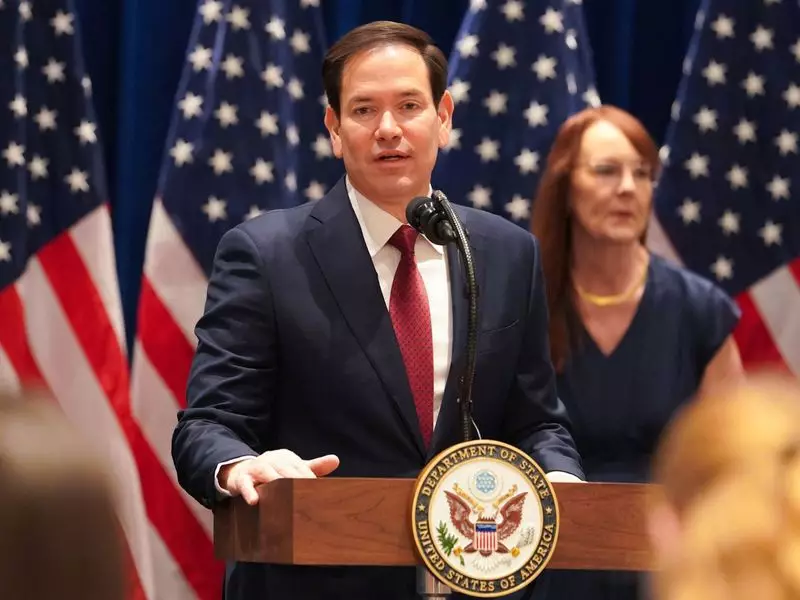
In a robust defence of American foreign policy, US Secretary of State Antony Blinken has justified the recent decision to reimpose sanctions on Venezuela's crucial oil and gas sector. The move, announced on April 17, 2024, reverses temporary relief granted just six months prior. Blinken's core argument hinges on a stark national security imperative: preventing US adversaries from gaining control over vital energy resources.
Core Justification: Safeguarding National Interest
Secretary Blinken, speaking with clarity, framed the sanctions not as an arbitrary punishment but as a necessary measure to protect American interests. He asserted that the administration of President Nicolas Maduro had failed to uphold its commitments under the Barbados Agreement, a deal aimed at ensuring democratic conditions for the 2024 presidential election in Venezuela.
The US decision specifically targets Venezuela's state-owned oil company, Petroleos de Venezuela SA (PDVSA). Companies now have a 45-day window, until May 31, to wind down their transactions with the Venezuelan oil and gas industry. This action effectively halts the most significant relief provided to Caracas, which was a limited license issued in October 2023 following the Barbados electoral roadmap agreement.

Blinken pointedly linked Venezuela's actions to broader regional stability, particularly highlighting the ongoing dispute with Guyana over the oil-rich Essequibo region. He accused the Maduro government of "not acting in good faith" and taking "a wrong turn" by continuing "repressive actions" against opposition figures and failing to reinstate banned candidates.
The Barbados Agreement and Broken Promises
The temporary sanctions relief of October 2023 was explicitly conditional. It was a carrot offered in exchange for concrete steps by Maduro's government towards a free and fair presidential election. The key demands included allowing all presidential candidates to compete and releasing wrongfully detained US citizens and Venezuelan political prisoners.
According to the US assessment, Caracas did not fulfil its end of the bargain. The reinstatement of sanctions on April 17 serves as a direct consequence of this failure. Blinken emphasised that while the US remains willing to reconsider its position if the Venezuelan government takes constructive steps, the current path necessitates a firm response. The administration's goal remains supporting the Venezuelan people's aspiration for democratic governance and free elections.
Geopolitical Repercussions and the Energy Equation
This decision carries significant weight in the global geopolitical arena, particularly concerning global oil markets and regional power dynamics. By restricting Venezuela's ability to freely trade its substantial oil reserves, the US aims to curb a major source of revenue for the Maduro regime. This financial pressure is a central tool in Washington's strategy.
Furthermore, Blinken's explicit mention of preventing adversaries from controlling resources underscores the strategic dimension. It signals Washington's intent to limit the influence of other global powers, which might seek to fill the vacuum created by US sanctions, in a region traditionally considered America's backyard. The situation also directly impacts the tense territorial dispute with Guyana, as control over energy resources is at the heart of the Essequibo conflict.
The 45-day wind-down period provides a critical buffer for global energy markets, allowing companies to adjust and seek alternative supplies, thereby mitigating potential immediate price shocks. However, the long-term implications point towards tightened global oil supply and increased geopolitical friction in Latin America.
In conclusion, the US administration, through Secretary Blinken, has drawn a clear line in the sand. The message is that support for democratic processes is non-negotiable, and actions perceived to threaten US national security by potentially empowering adversaries will be met with decisive economic measures. The ball is now in Venezuela's court to alter its course if it seeks renewed sanctions relief.