In a significant escalation, the United States has carried out a major military operation in Venezuela, leading to the detention of the country's president, Nicolas Maduro, and his wife. US Vice President JD Vance has robustly defended the controversial action, citing long-standing allegations of drug trafficking and the misuse of American-owned oil assets by the Caracas regime.
Vance Justifies Action on Drug and Oil Charges
The operation, described as a "large-scale strike against Venezuela," was executed on Saturday. In a coordinated effort involving US intelligence and law enforcement, President Nicolas Maduro and First Lady Cilia Flores were taken into custody in the capital, Caracas, and subsequently transported out of the country.
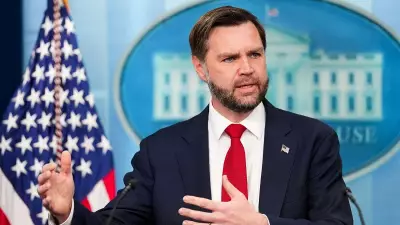
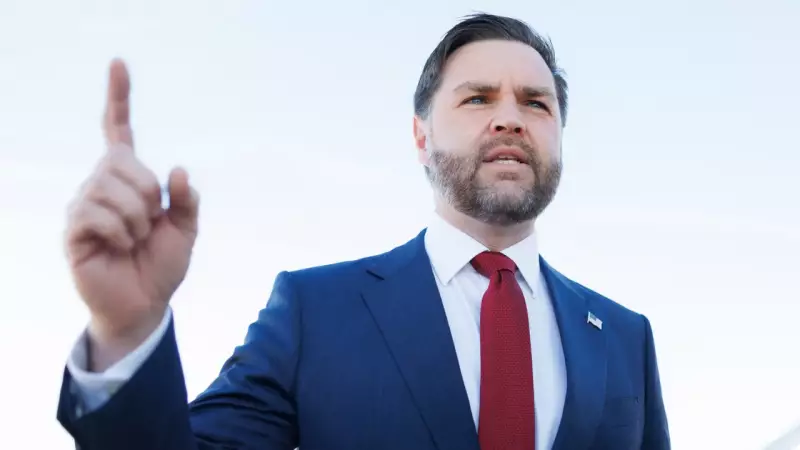
Defending the move on social media platform X, Vice President JD Vance rejected arguments that Venezuela has a minimal role in the global narcotics trade. He emphasised that cocaine trafficking remains a key financial pillar for cartels across Latin America.

"You see a lot of claims that Venezuela has nothing to do with drugs because most of the fentanyl comes from elsewhere. First off, fentanyl isn't the only drug in the world, and there is still fentanyl coming from Venezuela, or at least there was," Vance wrote.
He added, "Second, cocaine, which is the main drug trafficked out of Venezuela, is a profit center for all of the Latin America cartels. If you cut out the money from cocaine (or even reduce it), you substantially weaken the cartels overall."
Addressing Fentanyl and Seized Oil Assets
Vance also addressed the separate but critical issue of fentanyl flowing from Mexico, stating it remains a policy priority and was a factor in President Trump's immediate border actions. Responding to critics who suggested the US was motivated purely by oil interests, Vance pointed to the historical nationalisation of American energy assets.
"About 20 years ago, Venezuela expropriated American oil property and until recently used that stolen property to get rich and fund their narcoterrorist activities," he asserted, using the term "narcoterrorist" to describe the regime's alleged actions.
Dismissing concerns over the use of military force, Vance framed the action as a necessary assertion of power. "Are we just supposed to allow a communist to steal our stuff in our hemisphere and do nothing? Great powers don't act like that," he said, crediting President Donald Trump with restoring the nation's stature.
Trump Announces Charges and Transition Plan
Following the operation, President Donald Trump announced that Maduro and Flores face formal charges in the United States. They have been charged in the Southern District of New York with alleged conspiracies related to drug trafficking and narco-terrorism and will face trial on American soil.
Trump outlined a plan for Venezuela's immediate future, stating that Washington would assume temporary control to ensure stability. "We're going to run the country until such time as we can do a safe, proper, and judicious transition. We want peace, justice and liberty for the great people of Venezuela," he declared.
The President stated the operation's goal was to bring the "outlaw dictator Nicolas Maduro to justice" and mentioned that US companies would assist in repairing Venezuela's damaged oil infrastructure, a key sector of its economy.
This dramatic intervention marks a new and volatile chapter in US-Venezuela relations, with immediate consequences for regional geopolitics, global oil markets, and the international fight against drug cartels. The world now watches as the US administers a tense transition in Caracas.