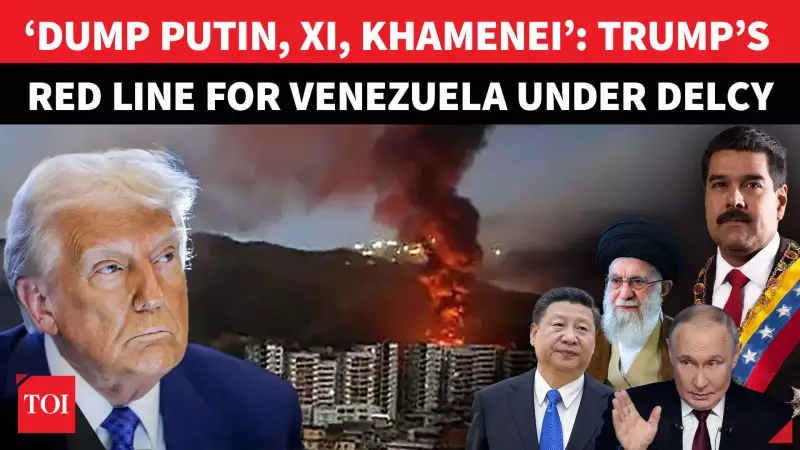
In a significant escalation of diplomatic pressure, the United States has laid out a series of tough demands for Venezuela's interim government following the ouster of Nicolás Maduro. The core condition involves the expulsion of foreign advisers from nations long considered adversaries by Washington.
Washington's Ultimatum to Caracas
U.S. Secretary of State Marco Rubio personally delivered the Trump administration's terms to interim President Delcy Rodríguez. The message was unequivocal: for a full reset in relations, Venezuela must expel advisers and personnel from China, Russia, Iran, and Cuba. American officials argue this move is critical to dismantle the foreign intelligence and military influence that became deeply entrenched during Maduro's rule.
The demand forms part of a broader strategy for a "post-Maduro reset" in Venezuela. Alongside the expulsion order, Washington is pushing for the reopening of Venezuela's lucrative oil sector to American companies. This indicates a clear intent to reshape the country's economic and geopolitical alliances in one swift move.

Venezuela's Delicate Balancing Act
Interim leader Delcy Rodríguez finds herself in a precarious position. She has publicly defended Venezuela's sovereignty, stating that the United States does not run the country. However, she has also carefully avoided direct confrontation with Washington. This tightrope walk continues even as American warships maintain a visible presence off the Venezuelan coast, a constant reminder of the military pressure.
The situation remains fluid and tense. With no clear roadmap for democratic elections yet established, the nation's future hangs in the balance. The interim government must navigate between asserting its independence and acceding to powerful external demands that could determine its legitimacy and access to global markets.
Geopolitical Stakes and Global Reactions
This development is not occurring in a vacuum. The demand to expel advisers from these specific countries targets the core of Maduro's international support network. China, Russia, and Iran provided crucial economic, military, and diplomatic backing to his regime. Their removal would signify a profound shift in Venezuela's foreign policy orientation, effectively pulling it into a closer orbit with the West and the United States.
The global reaction to this American ultimatum is still unfolding. Allies and adversaries alike are watching closely, as the outcome in Venezuela could set a precedent for how regional power dynamics are managed in the future. The success or failure of this pressure campaign will have significant implications for US influence in Latin America and its broader strategic competition with Russia and China.
For now, all eyes are on Delcy Rodríguez's next move. Will she comply with Washington's demands to secure economic relief and political recognition, or will she resist, potentially facing further isolation? The answer will define Venezuela's path for years to come.