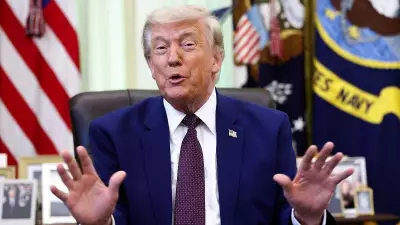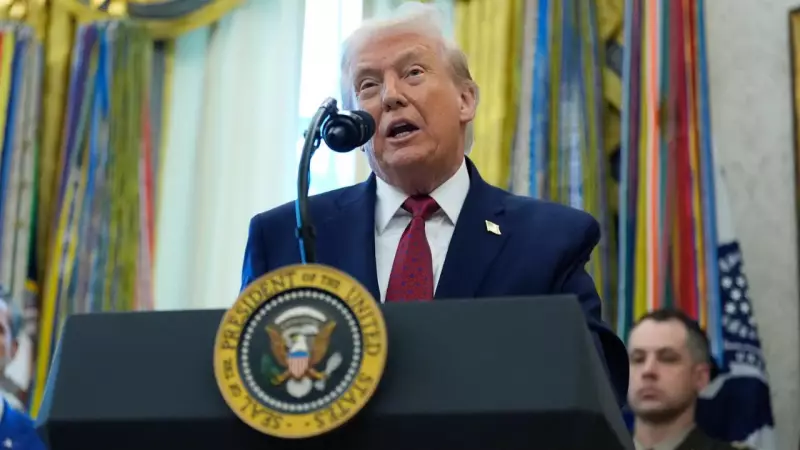
In a significant policy escalation, US President Donald Trump has officially classified illicit fentanyl and its key precursor chemicals as weapons of mass destruction (WMD). This executive action places the deadly synthetic opioid in the same strategic category as nuclear, chemical, and biological weapons, fundamentally reframing America's response to the drug epidemic from a public health issue to a direct national security threat.
Why Fentanyl is Now in the Same League as Chemical Weapons
The White House order argues that illicit fentanyl's extreme potency and catastrophic death toll justify its new designation. The document states, "Illicit fentanyl is closer to a chemical weapon than a narcotic," highlighting that a minuscule amount—as little as two milligrams, comparable to a few grains of salt—can be fatal. This lethal potential, authorities claim, makes it analogous to traditional chemical warfare agents designed for mass casualties.
Fentanyl is a fully synthetic opioid, approximately 100 times stronger than morphine and 50 times stronger than heroin. While it has legitimate medical uses for pain management, its illicit version has flooded the black market. The US Centers for Disease Control and Prevention (CDC) data reveals a staggering surge in deaths: from around 2,600 annually in 2011–2012 to over 71,000 in 2021. From 2013 to 2021, synthetic opioids were implicated in more than 260,000 overdose deaths in the United States.

The danger is compounded by how the drug is sold. It often appears as a powder or in counterfeit pills and is routinely mixed with substances like heroin, cocaine, or methamphetamine, leaving users unaware they are consuming a far more potent and deadly substance.
Unleashing a Full-Scale Government Response
The WMD designation is not merely symbolic. It is designed to "unleash every available tool" across the federal government to dismantle the criminal networks behind the fentanyl trade. The order directly links the drug's production and trafficking to funding assassinations, insurgencies, and violent campaigns by cartels and foreign terrorist organisations.
The executive order mandates a coordinated, multi-agency crackdown:
- The Attorney General is directed to pursue enhanced criminal prosecutions and tougher sentencing for fentanyl trafficking.
- The Treasury and State Departments are instructed to target and disrupt the international financial networks that facilitate fentanyl production.
- The Department of Homeland Security will now employ counter-proliferation intelligence—typically reserved for WMD threats—to track and intercept fentanyl smuggling networks.
- The Pentagon is tasked with assessing whether military resources should be deployed to support domestic law enforcement efforts. The armed forces must also update homeland chemical-incident response plans to explicitly include fentanyl scenarios.
Cartels, Terrorism, and a Broader 'Narco-Terrorist' Campaign
This move aligns with President Trump's intensifying campaign against what his administration labels "narco-terrorists" in Latin America. The order singles out two major Mexican cartels as the primary forces responsible for distributing fentanyl within the US, accusing them of waging armed conflict over territory and trafficking routes.
Trump has repeatedly emphasised that fentanyl kills more Americans than bombs or conventional weapons. The administration has also suggested, though experts remain sceptical, that the drug could theoretically be weaponised in concentrated form for terror-style attacks by organised adversaries.
By signing this order, President Trump has cemented a new, hardline approach. The fentanyl crisis is no longer just a devastating public health emergency; it is now officially a battlefield in America's national security landscape, triggering a more aggressive and militarised strategy to combat its flow and the criminal empires it fuels.