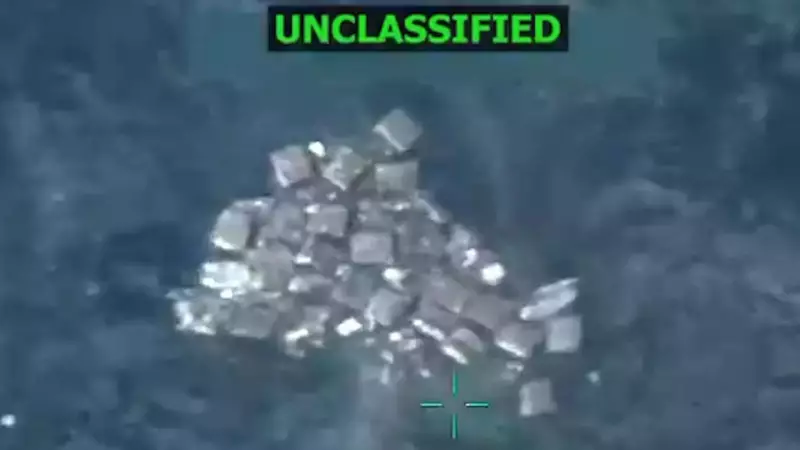
Shocking new details have emerged about a United States military operation in the Caribbean Sea, where two survivors of an initial strike were reportedly killed in a follow-up attack after being seen making gestures that could be interpreted as calling for help or surrendering.
The Controversial Operation and the Video Evidence
According to sources familiar with a video shown to American lawmakers, the incident occurred on September 2nd. The US military targeted an alleged drug-smuggling boat. After the first strike, two individuals who survived were seen on video waving before a second, follow-up strike was conducted, which resulted in their deaths. The sources indicated the gestures could have been a desperate call for assistance or an attempt to surrender to avoid further attack.
This operation marked the first of more than 20 similar attacks on suspected drug-carrying vessels authorised under the Trump administration. The Pentagon has reported that over 80 people have died in these strikes collectively, with 11 fatalities in the initial September 2 attack alone.

Lawmakers React: Distress vs. Defence
Members of Congress were shown the video during a closed-door briefing with the operation's commander, Admiral Mitch Bradley, and Joint Chiefs Chairman General Dan Caine. The footage prompted starkly different reactions.
Democratic Representative Jim Himes from Connecticut described the scene as "one of the most difficult things he's ever seen in his life." He stated the survivors appeared to be "in clear distress without any means of locomotion."
In contrast, Republican Senator Tom Cotton of Arkansas defended the military's actions. He argued the survivors were "trying to flip a boat loaded with drugs bound for the United States back over so they could stay in the fight" and insisted the strikes were "entirely lawful and needful."
Legal Questions and Official Statements
The premise of these strikes remains legally contentious. While defence officials have consistently defended them as necessary to combat narcotics trafficking, legal experts and some lawmakers have raised alarms. They express concern that targeting survivors could potentially constitute a war crime.
President Donald Trump hinted he might support releasing the video publicly but denied any knowledge of an order to target survivors. "I don't know that that happened... And Pete said he did not want that — he didn't even know what people were talking about. We'll look into it. But no, I wouldn't have wanted that. Not a second strike," Trump stated, referring to Defence Secretary Pete Hegseth.
The Pentagon, through spokesperson Sean Parnell, maintains that these "ongoing operations to dismantle narcoterrorism and to protect the Homeland from deadly drugs have been a resounding success." Secretary Hegseth characterised the strikes as "lethal, kinetic strikes" aimed at stopping drug trafficking and destroying vessels linked to designated terrorist organisations.
The revelation has ignited a fierce debate in Washington, balancing national security imperatives against international humanitarian law, with the haunting video evidence at its core.