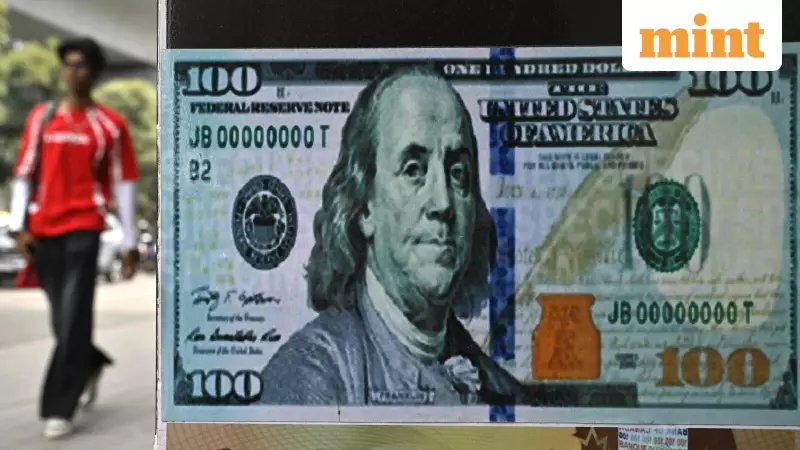
The US economy has delivered a powerful surprise, posting robust growth in the third quarter of 2025 and entering 2026 on a resilient note. Despite widespread predictions of a downturn following policy shifts at the start of the year, the world's largest economy has demonstrated remarkable strength, fueled by key sectors like technology and consumer spending.
Strong Growth Defies Gloomy Forecasts
According to data from the Federal Bureau of Economic Analysis, the US economy expanded by 4.3% in the third quarter of 2025. This growth rate is not only the fastest witnessed in nearly two years but also significantly outperformed expert projections by 130 basis points. The anticipated growth was a modest 3%, making the actual figure a substantial upside surprise. This follows a 3.8% growth in the second quarter, bringing the overall growth for the first three quarters of the year to 2.5%.
The surge was propelled by a combination of factors: higher consumer spending, increased corporate investments in artificial intelligence, larger government defence spending, and a favourable trade dynamic with higher exports and lower imports. This multi-pronged boost ensured the US gross domestic product rose sharply, confounding initial expectations set at the beginning of the year.

Why the Recession Threat Faded
When Donald Trump returned to the White House in January 2025, his administration's policies—including a renewed tariff war and a crackdown on illegal immigration—led many analysts to predict an imminent recession. The logic was straightforward: high tariffs would inflate prices in an import-reliant economy, triggering runaway inflation and forcing the Federal Reserve to hike interest rates. Simultaneously, mass deportations were expected to create labour shortages in sectors like agriculture, pushing wage costs up and stalling economic growth.
However, these dire scenarios did not fully materialise. Inflation has remained anchored near the 3% mark, partly because the Trump administration rolled back or exempted many critical products from steep tariffs. Furthermore, although the US Department of Homeland Security reported that around 2.5 million illegal immigrants left the country, a severe wage spiral was avoided. Adding to the positive sentiment, US stock markets have scaled to all-time highs.
The Underlying Strain of a K-Shaped Recovery
Despite the headline growth, not all is well beneath the surface. The US is experiencing a pronounced K-shaped economic recovery. While affluent Americans continue to drive consumer spending, middle and lower-income households face a growing affordability crisis due to a higher cost of living and a weaker labour market.
This strain is evident in the economic data. Rising inflation has dampened consumer sentiment, leading to a stalling of retail sales. More critically, the unemployment rate reached 4.6% in November 2025, the highest level since September 2021. This precarious situation puts the Federal Reserve in a difficult position: cutting interest rates to boost employment risks reigniting inflation, while holding rates steady could further weaken the job market.
Outlook for 2026: Cautious Optimism Prevails
As the US economy steps into 2026, experts maintain that it is on strong footing, albeit with clear pain points. The corporate sector's health is a significant pillar, with continued heavy investment, particularly in the artificial intelligence domain, providing a growth engine.
The economy is also poised to gain from two major policy tailwinds. First, the tax cuts announced by the Trump administration are set to take effect in 2026. Second, the cascading effects of a loosened monetary policy will provide support. The Federal Reserve has already cut interest rates by 75 basis points since September 2025. The International Monetary Fund estimates align with this cautiously optimistic view, projecting US growth at 2% for 2025 and 2.1% for 2026.

In summary, the US economy's performance in 2025 has been a story of resilience against odds, powered by technology and spending, yet complicated by an unequal recovery. The dream run faces challenges, but the foundational strength suggests the expansion has room to continue.