

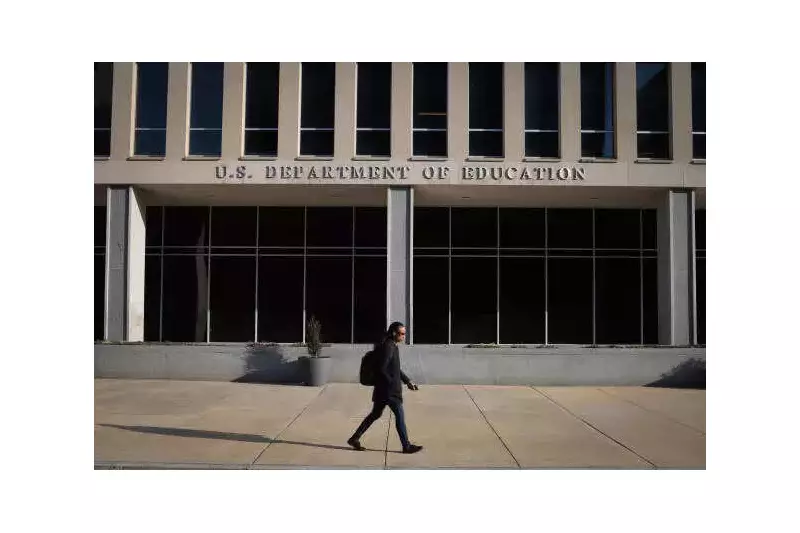
In a significant reversal, the Trump administration has ordered dozens of US Education Department employees, previously marked for layoffs, to return to work. This urgent recall aims to tackle a rapidly escalating backlog of civil rights complaints from students and families across the nation.
A Recall Forced by Rising Caseload
The decision, confirmed by the department, is not a change in policy but a practical response to a mounting crisis. Officials issued a directive on Friday, ordering staff to resume duty by December 15. The order explicitly states that the Office for Civil Rights (OCR) requires all available personnel to prioritise existing complaints.
For months, these workers had been on administrative leave as the department battled lawsuits over its plan to cut positions in the OCR. This office is the key federal body responsible for probing discrimination in schools and colleges based on disability, sex, race, and religion.

Department spokesperson Julie Hartman, in comments carried by the Associated Press (AP), confirmed the move. She clarified that the administration still intends to pursue the layoffs as part of a broader effort to shrink the department. The government will continue its legal appeal but will utilise all staff currently on the payroll in the interim.
Shrinking Staff, Expanding Backlog
The scale of the challenge is stark. Earlier this year, more than 200 workers in the OCR were targeted for layoffs. These cuts have been entangled in legal disputes since March. Although an appeals court briefly allowed the reductions in September, a separate lawsuit has put them on hold again.
AP analysis reveals a dramatic shrinkage in the Education Department's workforce. It has fallen from roughly 4,100 employees when President Trump took office to about half that number today. Concurrently, the backlog of discrimination complaints at the OCR has ballooned. From about 20,000 cases at the start of the Trump presidency, the pile-up has now grown to over 25,000 complaints.
The department has not specified how many workers will return, noting some on leave have already departed for other jobs.
Consequences for Families and Federal Role
The OCR's work is critical. It enforces federal anti-discrimination laws and has the power to investigate complaints nationwide. In severe cases, it can withhold federal funding from non-compliant institutions. Most cases are resolved through voluntary agreements, a process dependent on sufficient staff to review evidence, interview families, and monitor compliance.
Trump officials have defended the cuts, arguing the office was inefficient. However, former employees and affected families tell a different story. In AP interviews, families reported waiting months for updates, with some receiving no communication at all, highlighting the human cost of the backlog.
This episode underscores a fundamental tension: the political project to reduce federal involvement in education versus the practical, legal demands of civil rights enforcement. When complaints rise and staff numbers fall, backlogs become more than statistics; they directly impact students awaiting justice.
What comes next? This recall appears a temporary measure, not a permanent solution. The administration's goal to shrink the department remains unchanged. For families awaiting answers, the true test will be the speed at which their long-pending cases finally begin to move forward.






