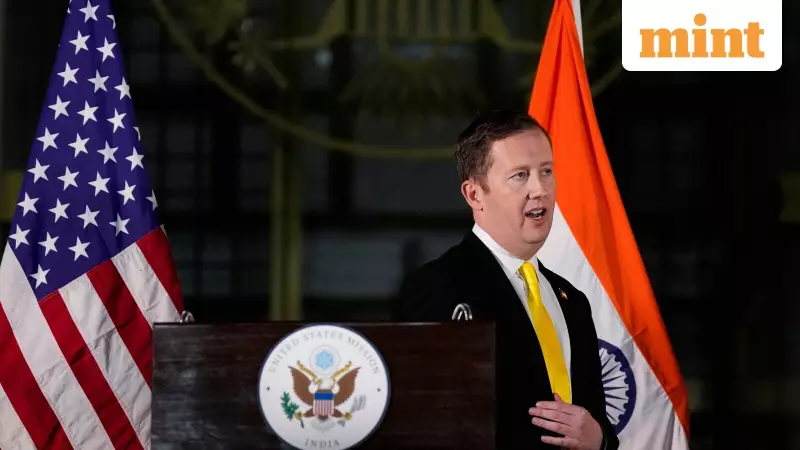
The United States Embassy in India issued a stern public warning on Tuesday, highlighting the significant criminal penalties for breaking U.S. immigration law. This statement came at a time when thousands of Indian professionals and their families remain stranded due to extensive delays and sudden cancellations of H-1B and H-4 visa appointments.
Visa Interviews Deferred, Social Media Scrutiny Intensifies
The core of the current crisis involves the abrupt postponement of thousands of H-1B visa interviews scheduled in India from mid-month. These appointments have been deferred by several months, in some cases until as late as May of the next year. The reason cited for this major disruption is the implementation of enhanced vetting procedures by Washington, which includes a closer examination of applicants' social media activity and online presence.
India has formally raised concerns with the U.S. government over these cancellations. Official discussions are reportedly underway to resolve the disruptions caused by the new vetting protocols. The H-1B visa program is a critical channel for American companies, especially in the technology sector, to hire foreign professionals with specialized skills and college degrees.

Trump's Fee Hike and Legal Challenges
Compounding the anxiety is the Trump administration's proclamation introducing a hefty $100,000 fee on new H-1B visas. President Donald Trump has framed this move as a necessary deterrent against the alleged misuse of the program, which he claims threatens national security and undermines job opportunities for American workers.
However, this fee hike is facing significant legal pushback. The U.S. Chamber of Commerce, the nation's largest business lobbying group, has appealed to a higher court after a federal judge ruled on December 23 that the President's plan was legally valid. The Chamber argues the fee is illegal, conflicts with federal immigration law, and exceeds the fee-setting authority granted by Congress by the legislature.
Separate lawsuits challenging the fee are also proceeding in Massachusetts and California. The legal battle is widely expected to eventually reach the U.S. Supreme Court for a final decision.
A Rollercoaster Year for US-India Relations
The visa issues have strained the U.S.-India bilateral relationship in 2025, testing it in a manner not seen in decades. Factors like punitive tariffs, the conflict with Pakistan, and now stringent immigration policies have created diplomatic friction. While the Trump administration maintains it must attract global talent due to domestic skill shortages, its simultaneous crackdown on legal immigration pathways has created widespread uncertainty and alarm among the Indian workforce in America and those seeking to join it.
Despite these challenges, the two nations have also found areas of collaboration over the year. Yet, for the thousands of Indians caught in the visa backlog, the immediate future remains uncertain, marked by postponed interviews, potential exorbitant costs, and a cloud of legal and policy ambiguity.