

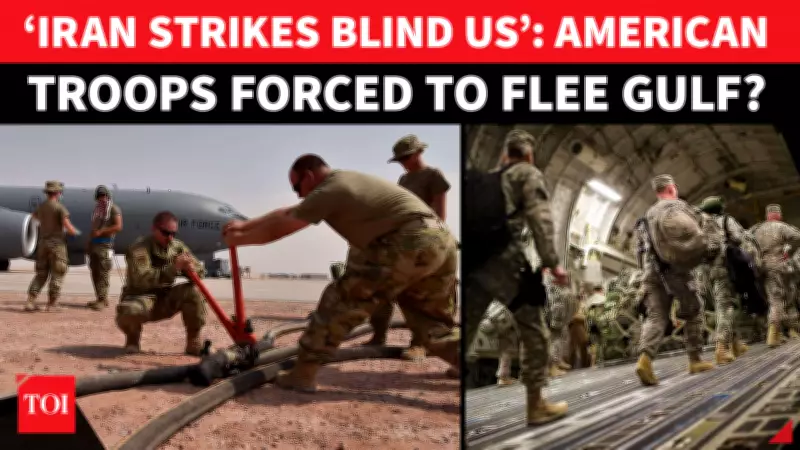
U.S. Military Withdraws Critical Aerial Refueling Assets from Saudi Arabia
The United States has initiated a significant military repositioning in the Middle East, evacuating its aerial refueling tanker fleet from Prince Sultan Air Base in Saudi Arabia. This strategic move comes as a direct response to sustained attacks by Iran targeting the facility, which have escalated regional tensions.
Fleet Relocation to European Bases
According to military sources, the U.S. is transferring KC-135 Stratotankers and KC-46A Pegasus aircraft from the Saudi base to undisclosed locations in Europe. At its peak operational capacity, Prince Sultan Air Base hosted a formidable contingent of 16 KC-135s and 6 KC-46As. These aircraft are indispensable for enabling U.S. bombers to execute long-range strike missions deep into Iranian territory.
The evacuation signifies a major tactical shift, as the removal of these tankers from the Gulf region substantially hampers the U.S. military's ability to sustain its current operational tempo against Iran. Without these refueling assets in proximity, coordinating extended aerial missions becomes logistically challenging and more resource-intensive.

Background of Iranian Aggression
The decision follows a series of aggressive actions by Iran, including a confirmed ballistic missile attack aimed at Prince Sultan Air Base. Saudi Arabia's Defence Ministry officially acknowledged intercepting the missile, underscoring the direct threat posed to U.S. and allied forces stationed there.
This incident is part of a broader pattern of Iranian hostilities in the Gulf region, which have targeted multiple U.S. military installations. Recent reports highlight attacks on other strategic locations, such as Al Udeid Air Base in Qatar and Al Salem Base in Kuwait, further illustrating the escalating conflict.
Implications for Regional Security
The relocation of the tanker fleet raises critical questions about the future of U.S. military posture in the Middle East. Analysts suggest that this move could signal a temporary recalibration rather than a full withdrawal, as the U.S. seeks to protect its assets while maintaining pressure on Iran.
However, the operational gap created by the tankers' absence may force the U.S. to rely more heavily on allied support or alternative basing strategies. This development occurs amid heightened global concerns over Iran's military capabilities and its willingness to engage in direct confrontations with U.S. forces.
As the situation evolves, the international community watches closely, recognizing that any miscalculation could precipitate a broader conflict. The U.S. military's adaptive response highlights the volatile nature of security dynamics in the Gulf, where strategic assets are increasingly vulnerable to asymmetric threats.






