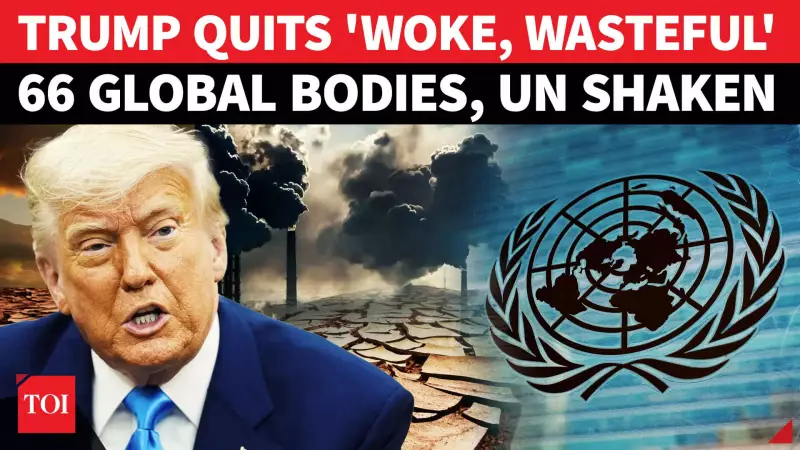
In a seismic shift for global diplomacy, the administration of President Donald Trump has declared that the United States will exit 66 international organisations. Announced on January 8, 2026, this move represents one of the most significant reductions in America's global engagement in modern times.
A Sweeping Exit from Global Cooperation
The list of organisations the US plans to leave is extensive. It includes numerous United Nations-affiliated agencies as well as bodies outside the UN system. Notably, the withdrawal extends to the India-led International Solar Alliance (ISA), a major clean energy initiative, and the Colombo Peace Plan. Officials from the White House and the State Department have publicly criticised these entities. They argue the groups are financially wasteful, poorly managed, and promote what they term "woke" political agendas that directly challenge American sovereignty and interests.
Rationale and Immediate Reactions
The administration's stance is clear: it will now pursue a policy of highly selective international engagement. The stated priority is to focus squarely on advancing U.S. national interests and countering strategic competition, particularly from China. This "America First" approach frames the multilateral system as often hostile to US goals.

However, the decision has sparked immediate and fierce criticism from a wide range of experts and former diplomats. Critics contend that this mass withdrawal will critically weaken multilateral diplomacy at a time of global crises. They warn it will disrupt vital humanitarian work, set back collective climate action efforts like those championed by the ISA, and potentially accelerate a dangerous fragmentation of the international order.
Broader Implications for Global Order
The ramifications of this policy are profound. For allies and partners like India, the US exit from the International Solar Alliance is a significant diplomatic and symbolic blow. It raises questions about Washington's commitment to collaborative solutions on climate change. Globally, the vacuum left by the US retreat from dozens of forums could be filled by other powers, reshaping norms and standards. While Trump officials insist on a more focused and sovereign-driven foreign policy, the world is left to grapple with the practical consequences of a less engaged United States, marking a definitive turn in how the nation interacts with the rest of the planet.