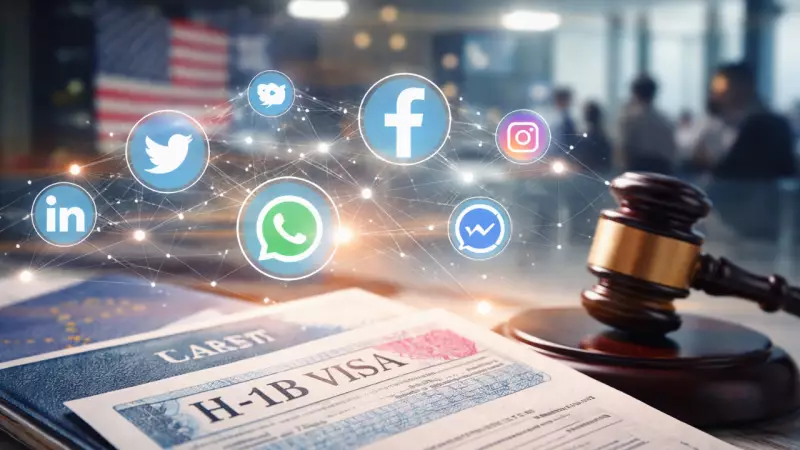
The United States has significantly tightened its visa screening process for skilled foreign workers, a move with major implications for Indian professionals. The H-1B visa, long a cornerstone of the US-India tech corridor, is no longer viewed merely as an employment document. Under the second administration of President Donald Trump, it has been recast as a geopolitical and national security instrument. Immigration policy is now deeply intertwined with trade and leverage, transforming skilled migration into a negotiable asset.
New Rules: Public Social Media Mandate for Visa Applicants
In a quiet but far-reaching policy shift, the US State Department announced expanded screening measures on December 3, 2025. The new rules, which took effect on December 15, 2025, now require H-1B applicants and their H-4 dependents to submit to an "online presence review." This extends a digital scrutiny regime initially applied to student (F, M) and exchange visitor (J) visas earlier in the year.
The directive is strikingly direct: to facilitate vetting, applicants must adjust the privacy settings on all their social media profiles to "public" for the duration of the visa process. The notice does not specify platforms or define what content might raise concerns, creating a clear but opaque standard where consular officers have broad discretion.

Who Bears the Brunt of the New Scrutiny?
The impact of this policy is not uniform. It creates the highest hurdles for applicants at critical transition points in their immigration journey.
First-time H-1B applicants face the greatest scrutiny. Without an established "paper trail" with US consulates, their entire profile—credentials, intent, and now their public digital footprint—is assessed from scratch. Any inconsistency between documents and online content can trigger prolonged administrative processing.
The most high-pressure group is students transitioning from Optional Practical Training (OPT) to H-1B status. They often have years of online history—from campus activism to casual posts—created before immigration scrutiny was anticipated. With strict employer start dates, even minor delays can derail career plans.
Critically, H-4 dependents are no longer secondary. Spouses and family members are now parallel applicants in the vetting process. A spouse's public social media content, even if unrelated to the principal applicant's job, can slow down or complicate the entire family's visa approval and relocation plans.
The Geopolitical Shift Behind the Policy
This expansion did not stem from a single security incident. It results from accumulating political anxieties and a precedent set with student visas. Bureaucratically, the H-1B program was the next large, visible pool to target.
Under the current US administration, the H-1B is framed less as a vital talent pipeline and more as a labor market lever—something to be tightened and audited. Official rhetoric has revived concerns about program misuse and fraud, even as employers defend its necessity for innovation.
Social media vetting is a convenient tool for this agenda. It promises greater control and scrutiny without rewriting immigration laws or enacting overt bans. There is a deeper conceptual shift at play: online behavior is increasingly treated not as private expression but as ambient data—context to be scanned, assessed, and judged for visa eligibility.
For hundreds of thousands of Indian tech professionals and their families, this marks a fundamental recalibration. The visa decision now hinges not just on professional qualifications and employer credentials, but also on how one has spoken, joked, protested, or affiliated online, with all the risks of misinterpretation that entails.