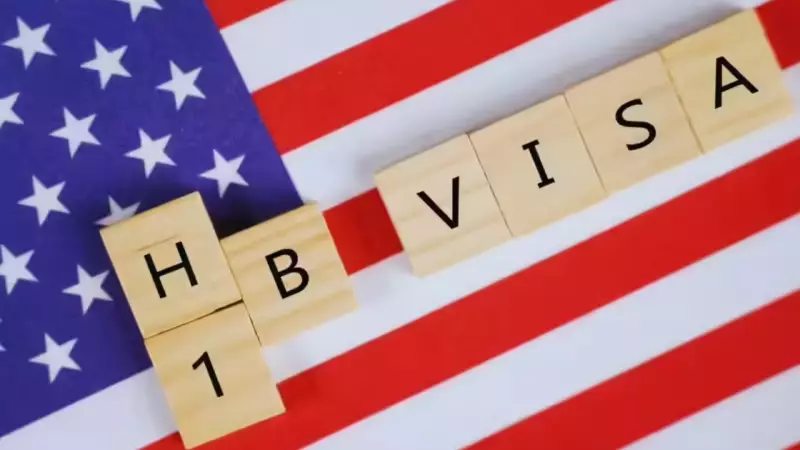
In a major policy shift, the United States has expanded its digital footprint screening to include hundreds of thousands of skilled foreign workers and their families. The US State Department announced late on Wednesday that starting December 15, all applicants for the H-1B work visa and their H-4 dependent family members will undergo mandatory social media profile reviews.
What the New Screening Rules Entail
Under the new directive, consular officers will be required to scrutinize an applicant's public social media profiles, posts, and information available across various online platforms and databases. Crucially, applicants will need to ensure their social media accounts are set to "public" settings to facilitate this review. The State Department reinforced its stance by stating that "every visa adjudication is a national security decision" and emphasized that a US visa is "a privilege, not a right."
This move marks a significant expansion of a policy that was first implemented in late June 2025 for F, M, and J visa categories, which cover students and exchange visitors. Mitch Wexler, a senior counsellor at the global immigration law firm Fragomen, confirmed that this is the first major ramp-up of the digital-footprint policy. He warned applicants to prepare for a far more intensive examination of their posts, online interactions, and overall digital activity.

Increased Scrutiny and Potential Consequences for Applicants
Internal guidance previously used for student visas provides a window into the parameters officers will likely follow. According to these guidelines, consular officials can draw negative inferences not only from problematic content but also if applicants keep their accounts private or have no online presence at all. Officers are instructed to look for content that reflects:
- Hostility toward US citizens, institutions, or culture.
- Support for designated terrorist organizations.
- Attempts to access or misuse sensitive US technology.
- A pattern of political activism that might continue after entering the US.
Finding derogatory or questionable material can trigger follow-up interviews, prolonged background checks, or outright visa refusal. Wexler cautioned that the expanded checks will increase the administrative burden on consulates, leading to longer processing times. "Applicants may face an increased likelihood of being flagged for lengthy background checks and longer waits for visa issuance," he said, which could delay their entry into the United States.
Major Impact on Indian IT Professionals and Broader Implications
This development is of particular concern to Indian nationals, who form the largest cohort of H-1B visa recipients. Data from the US Citizenship and Immigration Services (USCIS) for fiscal year 2024 shows that Indians secured approximately 80,500 new H-1B visas, vastly outpacing the next closest country, China, which received about 19,600.
The policy expansion occurs alongside a broader, contentious debate in the US about online speech and censorship. A recent internal cable sent to all US missions on December 2 further complicates the landscape. It instructs consular officers to review the resumes or LinkedIn profiles of H-1B applicants and their accompanying family members for work in fields like misinformation, disinformation, content moderation, and online safety.
The cable explicitly states that if evidence is found that an applicant was responsible for censorship of protected expression in the US, they should be deemed ineligible for a visa. This has sparked criticism from immigration attorneys. Cyrus D. Mehta, an immigration attorney, told TOI that the policy appears hypocritical, punishing individuals for censorship activities while also potentially penalizing them for expressing views disfavored by the administration, even if protected under the First Amendment.

Similarly, Rajiv S. Khanna, managing attorney at Immigration.com, expressed dismay that a nation which holds itself as a beacon of free speech would implement such measures. The latest rules follow a series of steps over the past year that have brought digital behavior to the forefront of US visa screening, signaling a new era of heightened scrutiny for all aspiring visitors and workers.