

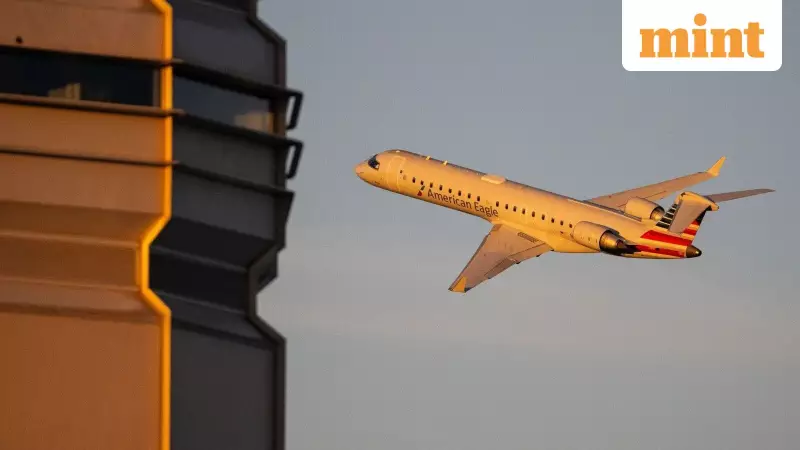
Major Disruption for US Air Travelers as FAA Implements Flight Cuts
Thousands of passengers across the United States are facing significant travel disruptions as multiple airlines have begun canceling flights following a Federal Aviation Administration directive. The government shutdown continues to create operational challenges, forcing many travelers to abandon their travel plans entirely.
The FAA has mandated that US carriers reduce their flight schedules effective Friday, though international operations remain exempt from these cuts. According to data from aviation analytics firm Cirium compiled by Bloomberg, fewer than 3% of the 25,375 flights scheduled for Friday have been canceled.
Which Airlines and Routes Are Most Impacted?
So far, four major airlines have canceled over 700 flights combined. Delta Air Lines confirmed it would cancel approximately 170 flights on Friday, while American Airlines planned to cut 220 daily flights through Monday. United Airlines stated that between Friday and Sunday, about 510 of its services would be canceled.

American Airlines and United Airlines are experiencing the most significant impact, with Colorado and Texas routes reporting the highest number of cancellations. The disruption affects 40 airports across the country, including major hubs like New York's LaGuardia, Newark, and John F. Kennedy, along with Washington, Chicago, Atlanta, Denver, Los Angeles, Dallas, San Francisco, Philadelphia, Miami, and Boston Logan International.
Phased Implementation of Flight Reductions
Government officials have informed carriers that flight reductions will be implemented in phases throughout the week. The cuts began with 4% reduction in flight volumes on Friday and are expected to escalate to 10% sometime next week. However, these plans remain fluid and subject to change based on evolving circumstances.
The FAA and US Transportation Department have ordered airlines to cut 10% of flight capacity overall. The reduction plan for domestic operations calls for 4% cuts on Friday, 6% on Tuesday, 8% on Thursday, and 10% by the following Friday. The FAA expressed concern about the system's ability to maintain current operations given unpredictable staffing shortages.
Passenger Anxiety and Airline Responses
Travelers are growing increasingly concerned about their plans. Some passengers shared their anxieties with USA Today, expressing hope that they would still be able to reach their destinations. "I'm concerned about Monday," said Sister Carol Weaver from Connecticut, referring to her return flight. She added that with her medical issues, she doesn't want to be stranded at the airport and hopes the situation improves soon.
In response to the crisis, American Airlines issued a statement assuring customers that the vast majority of travel would remain unaffected and long-haul international flights would continue as scheduled. The airline promised to proactively contact impacted customers as schedule changes occur.
Delta Airlines confirmed it had completed all planned FAA-directed flight cancellations for November 7 and 8. The airline is temporarily reducing flights at 40 US airports to comply with federal directives and offering flexible options for customers to change, cancel, or refund flights without penalty.
Southwest Airlines announced it would begin with a 4% reduction in flying across 34 of the more than 117 airports it serves starting November 7. The airline stated it was making required scheduling adjustments in a way that minimizes disruption for customers while complying with the FAA's order.
The situation has taken an emotional and financial toll on aviation workers, with a Bloomberg report noting that over 13,000 controllers have been forced to work without pay. While there's no definitive timeline for the flight cancellations, a source told FOX Business that the reductions could remain in place until the FAA feels comfortable with safety levels.






