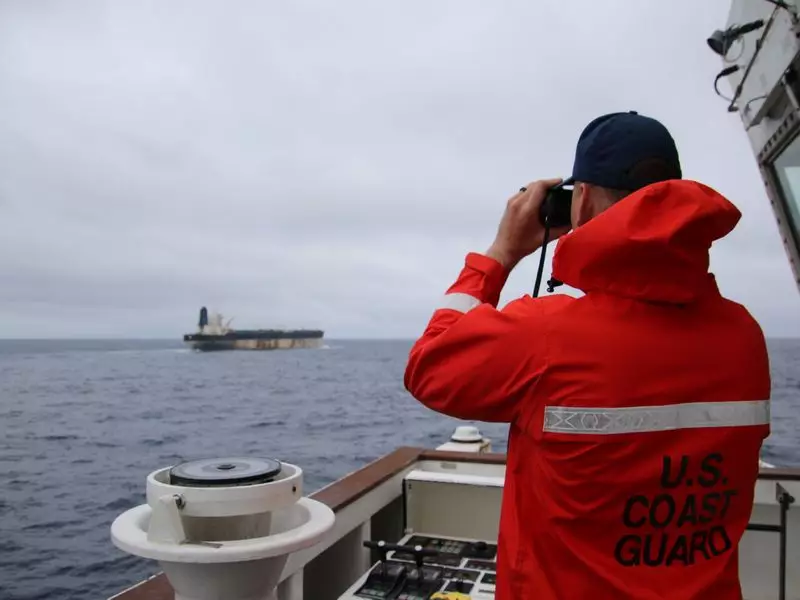
In a significant maritime enforcement action, forces from the United States have seized two oil tankers with connections to Venezuela. The operation was carried out in the Atlantic Ocean, underscoring Washington's ongoing efforts to enforce sanctions against the South American nation's state-owned oil company.
Details of the Maritime Seizure
The incident involved the US Navy taking control of the vessels, identified as the Caribbean Voyager and the Voyager I. These ships were reportedly transporting cargoes of crude oil that originated from Petróleos de Venezuela, S.A. (PDVSA). The seizure is directly linked to the comprehensive sanctions regime imposed by the US government on Venezuela's crucial oil sector.
Authorities stated that the action was executed based on a request from the US Department of Justice. The legal basis for the seizure stems from sanctions evasion allegations. The US has maintained that the Nicolás Maduro-led government uses oil revenues to support what it describes as an illegitimate regime, justifying such interdictions.

Context and Background of US-Venezuela Tensions
This event is not an isolated one but part of a broader pattern of US actions aimed at crippling the economic lifeline of the Venezuelan government. For several years, Washington has enforced strict sanctions designed to cut off the flow of petrodollars to Caracas. The goal has been to pressure Maduro into conceding to political demands, including holding free and fair elections.
The seizure of these two tankers highlights the extraterritorial reach of US sanctions. It demonstrates how Washington is willing to use its naval power to physically prevent the movement of Venezuelan oil on the high seas, beyond its immediate territorial waters. This represents a hard-power complement to the financial sanctions that have already severely impacted PDVSA's operations.
Potential Repercussions and Regional Impact
The immediate consequence is the loss of significant revenue for Venezuela, which is almost entirely dependent on oil exports. The confiscated cargo represents millions of dollars that will not reach the cash-strapped government in Caracas. This action will likely further strain the country's ability to import essential goods, including food and medicine, exacerbating the existing humanitarian crisis.
Furthermore, this seizure sends a stark warning to international shipping companies, insurers, and traders. It signals that engaging in transactions with Venezuelan oil entities, even indirectly, carries substantial risk of asset forfeiture and legal action by the United States. The move could further chill the global market for Venezuelan crude, isolating the country's energy sector even more.
Regionally, the action may provoke diplomatic protests from Venezuela and its allies, who often accuse the US of overstepping international law. It reinforces the deep geopolitical rift in the Western Hemisphere regarding the approach to the Maduro administration. For India, which has historically been a buyer of Venezuelan crude, such enforcement actions underscore the complex navigation required between energy needs and compliance with unilateral US sanctions.
In conclusion, the seizure of the two tankers is a bold and tangible manifestation of the US sanctions policy against Venezuela. It moves the economic pressure from the digital ledgers of banks to the physical realm of the open ocean, marking an escalation in the tactics used to isolate the Maduro government and control the flow of Venezuelan oil.