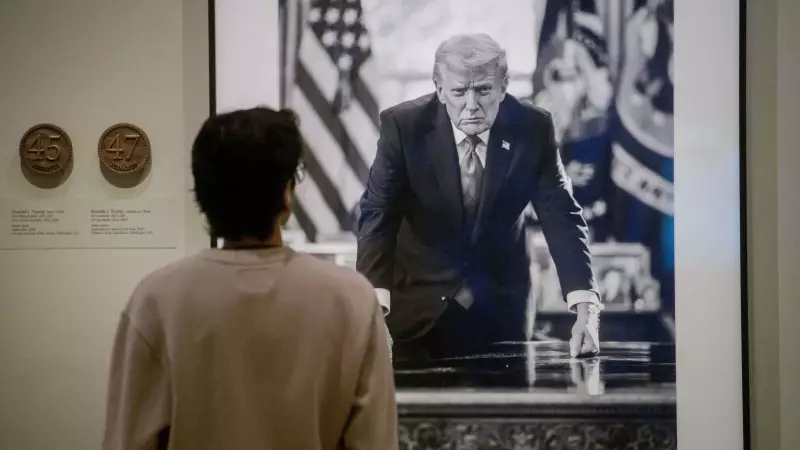
The Smithsonian Institution's National Portrait Gallery in Washington, D.C., has made a significant and controversial change to the display accompanying the official portrait of former U.S. President Donald Trump. The museum has removed all mentions of the January 6, 2021, attack on the U.S. Capitol and Trump's subsequent second impeachment from the text label next to his photograph.
What Exactly Was Changed?
According to reports, the original label for the portrait, which was installed in 2021, contained a detailed description of Trump's single term in office. This description included a direct reference to the tumultuous end of his presidency. It stated that his term concluded "amidst an impeachment and a contentious transition of power that included a violent insurrection at the U.S. Capitol on January 6, 2021."
The revised text, which was discovered by journalists this week, presents a starkly different narrative. The new label offers a more general summary, stating: "His term concluded with a contentious presidential transition." All specific mentions of the January 6 insurrection, the impeachment charges related to it, and the word "violent" have been completely excised.

Timing and Institutional Response
The alteration appears to have been made in late 2023 or early 2024, though the exact date and the decision-making process behind it remain unclear. When questioned about the change, a spokesperson for the Smithsonian Institution provided a statement defending the action.
The spokesperson explained that the institution periodically reviews and updates the text accompanying its collections to ensure it is "informative, relevant, and concise" for the public. They framed the revision as a routine curatorial practice aimed at focusing on the portrait subject's biography rather than specific historical events. However, they did not clarify who authorized the removal of these pivotal historical facts.
Reactions and Accusations of Revisionism
The change has ignited a firestorm of criticism from historians, political commentators, and Democrats. Critics have lambasted the move as an act of historical revisionism and a form of political sanitization. They argue that erasing the January 6 attack from the contextual description of Trump's presidency whitewashes a critical and dark chapter in American democracy.
Many see this as an attempt to downplay the severity of the events that led to Trump's historic second impeachment. The incident is viewed by a large segment of the American public and numerous official investigations as a direct assault on the peaceful transfer of power. Opponents of the change ask how a museum dedicated to history can omit such a consequential event from the record of a president's tenure.
Conversely, some supporters of the former president have welcomed the change, having long argued that the original label was politically charged. The debate places the prestigious, federally funded Smithsonian Institution in the middle of a highly polarized political controversy, raising questions about how museums should present recent, contentious history.
Broader Implications for Historical Record
This incident transcends the specifics of one display label. It touches on fundamental questions about the role of cultural institutions in shaping public memory. The National Portrait Gallery's action sets a concerning precedent for how major historical events might be softened or erased from official narratives in the future.
The controversy also highlights the intense pressures faced by public institutions in an era of deep political division. As the 2024 U.S. presidential election approaches, with Donald Trump as the presumptive Republican nominee, every action related to his legacy is scrutinized. The Smithsonian's decision, whether intended as routine curation or not, is now a part of that heated political discourse.
The portrait itself, a photograph by former White House official Shealah Craighead, remains on display. But the story now is as much about the words that were removed as it is about the image that remains.