

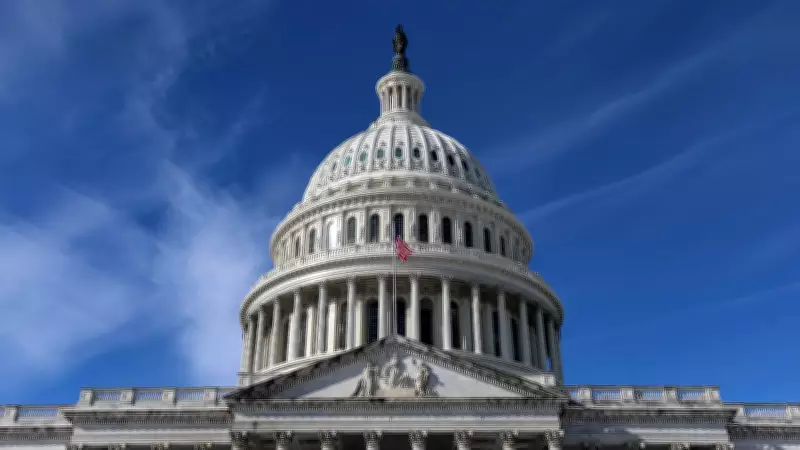
US Government Shutdown Looms as Congress Fails to Approve Spending Deal
The United States government is on the brink of a partial shutdown as lawmakers in Congress have been unable to reach a consensus on a critical spending deal. With time rapidly running out to approve funding before the impending deadline, the nation faces the prospect of significant disruptions to federal services and operations.
Deadline Pressure and Political Gridlock
As the clock ticks down, Congress has found itself mired in political gridlock, unable to pass the necessary legislation to keep the government fully operational. The failure to approve a spending deal stems from deep-seated disagreements among lawmakers over key issues, including budget allocations and policy priorities. This stalemate has left federal agencies in a state of uncertainty, with many preparing for the potential impacts of a shutdown.
The consequences of a government shutdown could be far-reaching, affecting everything from national parks and museums to essential services like immigration processing and tax collection. Federal employees may face furloughs or delayed paychecks, adding to the economic strain on households across the country.

Historical Context and Current Challenges
This is not the first time the US has faced such a crisis; government shutdowns have occurred periodically in recent decades, often driven by partisan conflicts. However, the current situation is exacerbated by heightened political tensions and a divided Congress, making compromise increasingly difficult. Lawmakers are under immense pressure to find a resolution, but with limited time, the path forward remains unclear.
Experts warn that a prolonged shutdown could have serious implications for the economy and public trust in government institutions. It may also delay critical programs and projects, from infrastructure improvements to scientific research, further complicating recovery efforts in a post-pandemic world.
Potential Outcomes and Next Steps
In the coming hours, Congress will need to act swiftly to avoid a shutdown. Possible scenarios include:
- A last-minute temporary funding measure, known as a continuing resolution, to buy more time for negotiations.
- A bipartisan agreement on a spending deal that addresses the core concerns of both parties.
- If no action is taken, a partial shutdown will begin, affecting non-essential government functions.
The outcome will depend heavily on the willingness of lawmakers to set aside differences and prioritize the nation's stability. As the deadline approaches, all eyes are on Washington, D.C., where decisions made in the next few days will shape the immediate future of the US government and its services to the American people.






