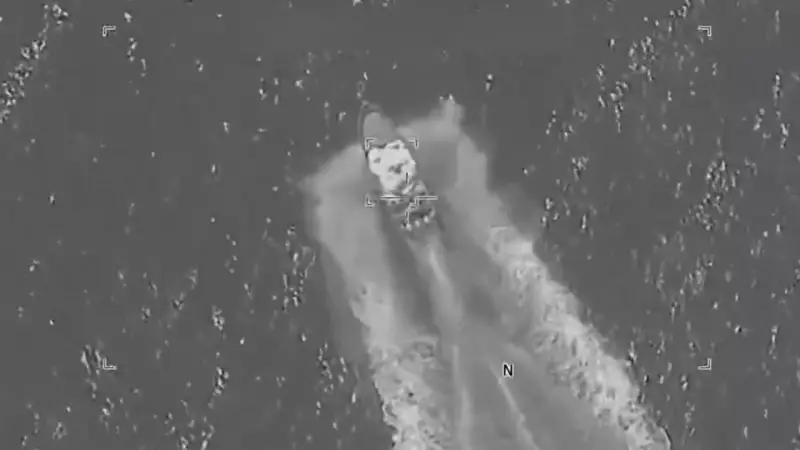
In a significant escalation of its maritime campaign, the United States military has conducted a deadly operation against suspected drug traffickers in international waters. The action, described as a "lethal kinetic strike," resulted in the deaths of eight people aboard three vessels in the eastern Pacific Ocean.
Details of the December 15 Operation
The strike was carried out on December 15 by the US Joint Task Force Southern Spear, operating under the direction of Defence Secretary Pete Hegseth. According to the US Southern Command, the targeted boats were intercepted while travelling along known narcotics routes in the eastern Pacific.
Military officials stated that intelligence assessments had confirmed the vessels were actively involved in drug trafficking. Furthermore, they were reportedly operated by organisations that the US government has designated as terrorist groups. The command provided a breakdown of the casualties: three men were killed on the first vessel, two on the second, and three on the third. All those killed were identified as "male narco-terrorists."

Wider US Pressure Campaign in the Region
This operation is not an isolated incident but part of a broader and increasingly aggressive US strategy in the Caribbean and eastern Pacific. The campaign has a particular focus on disrupting networks linked to Venezuela. In recent months, Washington has significantly expanded its naval presence in these waters.
The military push is complemented by other measures, including economic sanctions and high-profile seizures of ships accused of transporting illicit oil and narcotics. US authorities argue that these comprehensive operations are crucial for dismantling networks that use drug smuggling and other illegal activities to fund armed groups and regimes hostile to US interests.
Implications and Escalation
The December 15 lethal kinetic strike marks a clear intensification in tactics. By moving beyond interdiction and seizure to direct lethal action, the US signals a harder line against what it terms narco-terrorist networks. This approach underscores the Biden administration's commitment to applying military force to combat transnational criminal organizations that are seen as threats to regional stability and US national security.
The long-term consequences of this escalated campaign remain to be seen. It is likely to further strain relations with the Venezuelan government and could provoke reactions from other actors in the region. The operation also raises complex legal and geopolitical questions regarding the use of force in international waters against non-state actors.