

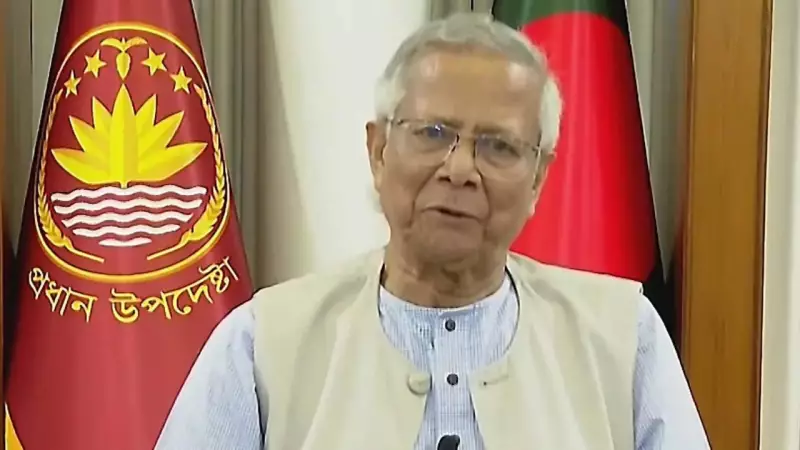
In a significant diplomatic intervention, a group of five United States lawmakers has voiced serious concerns regarding the ongoing political situation in Bangladesh. The members of Congress have directly addressed the country's interim government, urging a reconsideration of the decision to fully suspend the activities of the ruling Awami League party.
Core Concerns Outlined in the Letter
The bipartisan letter, signed by Representatives Gregory W. Meeks, Bill Huizenga, Sydney Kamlager-Dove, Julie Johnson, and Thomas R. Suozzi, emphasizes the critical need for an inclusive political process. The lawmakers argue that for Bangladesh to achieve genuine democratic stability, the interim administration must collaborate with all political factions. Their primary demand is the creation of conditions conducive to free and fair elections, allowing the Bangladeshi public to express their will peacefully through the ballot box.
The communication stresses that such an environment cannot be realized if the government proceeds with suspending political parties or revives what they term the "flawed International Crimes Tribunal." The letter explicitly references assessments by the US Department of State, which found that the general elections held in 2018 and 2024 were neither free nor fair. The lawmakers warn that banning a major party would inevitably compromise the integrity of any future electoral process.

Human Rights and Democratic Principles
Drawing attention to severe human rights issues, the letter cites a February 2024 fact-finding report from the United Nations Office of the High Commissioner for Human Rights (OHCHR). The report estimated that approximately 1,400 people were killed by security forces during protests in July and August of 2024. The US representatives call for accountability that aligns with democratic values, breaking what they describe as a cycle of retaliation.
"Freedom of association, as well as the principle of individual rather than collective criminal responsibility, are fundamental human rights," the letter states. It expresses concern that the blanket suspension of a political party contradicts these principles, suggesting that legal focus should be on individuals accused of crimes, not on collective punishment.
Appeal for Democratic Transition
The lawmakers conclude with a forward-looking appeal, expressing hope that the current government or a democratically elected successor will revisit the suspension decision. They underscore that the people of Bangladesh deserve the right to choose their leadership in a participatory electoral process where all parties can compete.
Reaffirming the strategic partnership, the letter adds, "Bangladesh is a critical partner for the United States, and we stand ready to work with you and your government to support both our bilateral relationship and Bangladesh's democratic transition in the months ahead." This communication highlights the growing international scrutiny on Bangladesh's internal political dynamics and the importance placed on its democratic trajectory by key global partners.






