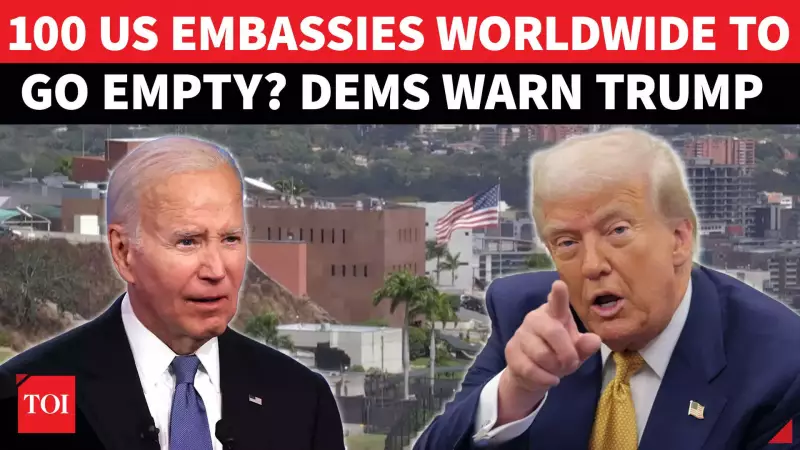
A significant diplomatic crisis is brewing in Washington D.C., with the potential to leave American embassies around the world without their top leadership. Democratic lawmakers are raising alarms over President Donald Trump's move to recall nearly thirty career ambassadors appointed during the Biden administration.
Democrats Sound Alarm Over Unprecedented Diplomatic Move
The controversy erupted on December 26, 2025, when Democratic senators on the influential Senate Foreign Relations Committee publicly urged President Trump to reverse his decision. They have labeled the mass recall of envoys as an unprecedented action in modern U.S. diplomatic history. According to the lawmakers, this sweeping step could result in more than one hundred American embassies worldwide operating without a confirmed ambassador.
The State Department has countered these claims, stating that such recalls are a standard procedural practice during a presidential transition. However, critics strongly disagree, arguing that no recent administration has taken such a broad action against nonpartisan, career diplomats who typically remain in their posts across different governments.

Risks of a Global Leadership Vacuum
The core of the Democrats' concern revolves around national security and global influence. They caution that a prolonged absence of senior U.S. diplomats in key capitals could create a dangerous power vacuum. This situation, they argue, might be exploited by geopolitical adversaries.
Lawmakers have specifically pointed to nations like China and Russia as potential beneficiaries who could seize the opportunity to expand their own influence at the expense of American interests. The senators warn that this could significantly weaken the United States' diplomatic standing and pose risks to its economic and security objectives abroad.
Implications for International Relations
The unfolding showdown is more than a domestic political dispute; it has direct consequences for international relations. An embassy without an ambassador lacks the highest-level authority to negotiate, advocate, and respond to crises. This could hamper everything from trade talks and strategic dialogues to emergency coordination for citizens overseas.
The debate highlights a deep divide over the role of career diplomats in U.S. foreign policy. While the administration frames it as a routine realignment, the opposition sees it as a politicization of the diplomatic corps that undermines institutional stability and sends a message of uncertainty to both allies and rivals.
As the situation develops, the world watches to see if the recall order will stand or if political pressure will force a recalibration, preventing what critics fear could become a self-inflicted wound on America's global leadership.