

US Military Recalibrates Academic Partnerships in Major Policy Shift
For generations, the United States military has cultivated robust academic relationships with the world's most prestigious universities, sending promising officers to elite campuses to enhance their leadership capabilities, strategic acumen, and technical proficiency. This longstanding tradition, widely regarded as a cornerstone of the military's intellectual framework, is now undergoing a profound and dramatic transformation.
Targeted Restructuring of Prestigious Fellowship Programs
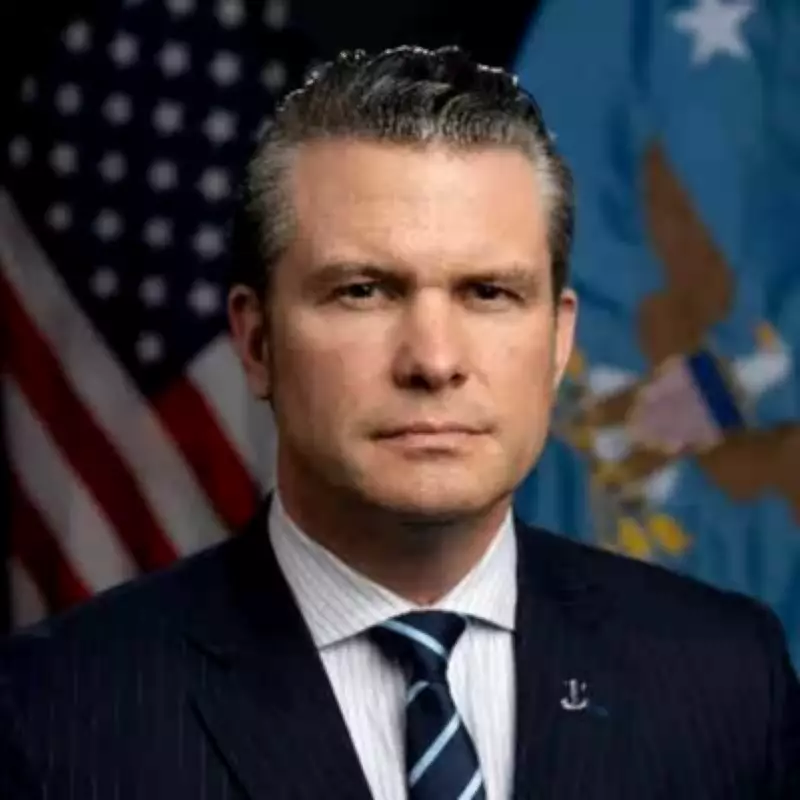
The Trump administration's broader campaign against perceived "wokeness" within public institutions has now reached the Pentagon's educational partnerships, initiating a focused restructuring of programs that connect military officers with American higher education. Spearheaded by Defence Secretary Pete Hegseth, this initiative has begun severing fellowships at Ivy League and other elite universities while redirecting officers toward alternative institutions, many of which are conservative Christian colleges and select public universities.
At the heart of this policy shift is the Senior Service College Fellowship, a highly prestigious program enabling mid-career military officers to pursue advanced studies at universities, think tanks, and federal agencies. Historically, this fellowship has served as a critical pathway to senior leadership, preparing officers for high-level strategic roles within the armed forces.

Specific Universities Removed from Fellowship Program
In a Pentagon memorandum issued last week, Defence Secretary Pete Hegseth announced that more than a dozen universities would be removed from the fellowship program beginning this autumn. The list includes several Ivy League campuses along with leading research institutions such as the Massachusetts Institute of Technology, Carnegie Mellon University, and Georgetown University, as confirmed by the Associated Press.
While the program itself is relatively modest in scale—with fewer than 80 officers currently enrolled across the 15 universities being phased out, according to Pentagon documentation—its symbolic significance is substantial. The fellowship has traditionally been associated with grooming officers for the upper echelons of military command.
Among its distinguished alumni are James McConville, the retired Army general who served as the Army's chief of staff from 2019 to 2023, and Lt. Gen. William Graham Jr., the current chief of the US Army Corps of Engineers. McConville completed his fellowship at Harvard University, while Graham undertook his at MIT, as documented in their official military biographies.
A Significant Departure from Historical Practice
Observers note that the Pentagon's intervention in determining where officers pursue academic training represents a significant departure from past practices. Critics have described the move as an "incredible overreach," highlighting that historically the Pentagon has avoided directing service members toward or away from specific universities. This decision has generated anxiety among academic institutions, with concerns that the current cuts may foreshadow deeper reductions affecting other military education programs.
Those programs include Tuition Assistance, the Reserve Officers' Training Corps (ROTC), and specialized educational tracks in fields such as law, engineering, and medicine. Although Hegseth's memorandum did not mention changes to those programs, the fellowship cuts have heightened apprehensions about broader institutional realignment.
Limited Scope Within a Vast Education System
Despite the political rhetoric surrounding the crackdown on "woke" institutions, the administration's actions have remained relatively narrow in scope thus far. The Pentagon has primarily targeted graduate-level fellowships, leaving intact the much larger Tuition Assistance program, which subsidizes college education for approximately 200,000 active-duty and reserve service members annually. This benefit covers up to $4,500 per year in tuition expenses.

An analysis of 2024 data by the Associated Press reveals that only a small number of service members were attending the elite universities affected by the fellowship cuts. Approximately 350 military students utilized Tuition Assistance to study at institutions such as Harvard University, Johns Hopkins University, and George Washington University.
In contrast, more than 50,000 service members were enrolled at the American Public University System, a for-profit online education provider with a reported graduation rate of 22%. The same analysis found that public universities attract the largest share of military students, accounting for about 40% of enrollments, while more than one-third of participants attend for-profit colleges, surpassing the number studying at private non-profit institutions.
Critics Warn of Strategic Consequences
Some education and defense experts argue that cutting ties with elite research universities could deprive the military of exposure to cutting-edge technological research and innovative strategic thinking. They caution that this shift might have long-term implications for military preparedness and intellectual diversity within the armed forces.
Harvard University Faces Sharpest Sanctions
Among the institutions affected, Harvard University appears to be bearing the brunt of the administration's actions. The Pentagon has barred all graduate-level professional military education programs at Harvard, including fellowships and certificate programs.
The university's Harvard Kennedy School responded by allowing active-duty service members admitted to its programs to defer their admission for up to four years. It has also arranged expedited consideration for those officers at other universities, including the University of Chicago and Tufts University.
This development carries a degree of personal irony for Hegseth, who earned a master's degree from Harvard before publicly returning his diploma during a 2022 Fox News segment as a symbolic protest against what he described as ideological bias at elite universities.
Redirecting Officers to New Academic Partners
In place of the universities removed from the fellowship program, the Pentagon has suggested 15 alternative institutions where officers could pursue advanced study. Topping the list is Liberty University, a Christian institution based in Virginia that already enrolls more than 7,000 military students using Tuition Assistance, according to the AP analysis. The university serves approximately 16,000 students on campus and more than 120,000 through online programs.
Liberty has experienced a series of high-profile controversies in recent years, including the 2020 departure of longtime president Jerry Falwell Jr. following multiple scandals. In a statement responding to the Pentagon's announcement, Liberty said it had not yet coordinated with the Department of Defence regarding any new fellowship partnership but expressed support for the initiative.
Another institution on the Pentagon's list is Hillsdale College, a conservative Christian college that has been collaborating with the White House on a campaign marking the United States' 250th anniversary. The proposed replacements also include major public universities such as the University of Michigan and the University of North Carolina, both large research institutions that already educate significant numbers of military-affiliated students.
Ideology Meets Military Strategy
Defending the decision, Hegseth argued that the fellowship changes would strengthen officer training by steering them toward institutions that support military values. In his memorandum, he accused several elite universities of becoming "factories of anti-American resentment" and stated that the newly selected institutions would provide officers with "a more rigorous and relevant education to better prepare them for the complexities of modern warfare."
Whether this shift ultimately reshapes the military's intellectual pipeline or remains a limited symbolic gesture remains to be seen. However, the Pentagon's move has already ignited a fierce debate over the intersection of ideology, academic freedom, and national security. For American universities and the military alike, a partnership that once appeared immune to political tides is now entering uncertain and uncharted terrain.





