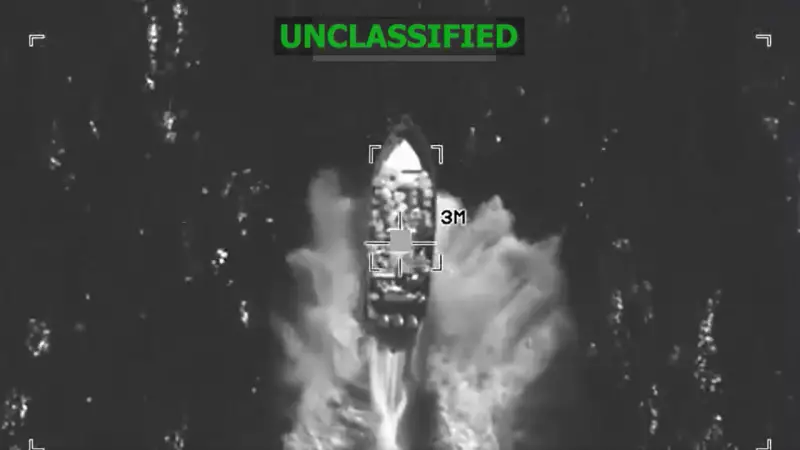
The United States military has confirmed the killing of four individuals during a strike on a suspected drug-trafficking vessel in the eastern Pacific Ocean. This action, part of an intensified counter-narcotics campaign, has emerged alongside revelations of a separate, controversial incident that is drawing sharp scrutiny from American lawmakers.
Details of the Latest Strike
According to a statement from US Southern Command on social media platform X, the strike was carried out on Thursday by the Joint Task Force Southern Spear. The operation was ordered by Defence Secretary Pete Hegseth after intelligence indicated the boat was operated by a designated terrorist organization and was transporting illegal narcotics along a known trafficking corridor. The military's post stated that "four male narco-terrorists aboard the vessel were killed." A short video released alongside the announcement showed the craft moving at high speed across the water before being hit by an explosion.
Lawmakers Alarmed by Classified Footage
This development came just hours after US lawmakers were shown classified footage from a different incident in early September. The footage depicted a subsequent US strike on a vessel that had already been destroyed in an earlier engagement, an action that resulted in the deaths of two survivors.

Representative Jim Himes, the top Democrat on the House Intelligence Committee, described the scene as deeply troubling. "The footage showed the United States military attacking shipwrecked sailors - bad guys, bad guys - but attacking shipwrecked sailors," Himes said, calling it one of the most disturbing things he had witnessed in public service. He emphasized that the two individuals were in clear distress, without any means of propulsion, next to a destroyed vessel.
Republican Representative Don Bacon echoed these concerns on CNN, stating that standard rules of war prohibit targeting survivors unless there is an "imminent threat," which he believed was absent in this case. "These two people were trying to survive and our... rules of war would not allow us to kill survivors," Bacon noted.
Defense and Diverging Accounts
However, Senator Tom Cotton defended the September operation, insisting the sequence of strikes on September 2 was lawful and necessary. He argued the footage showed the two survivors "trying to flip a boat loaded with drugs bound for the United States back over so they could stay in the fight."
Amid the controversy, both the White House and the Pentagon have attempted to distance Defence Secretary Hegseth from the specific decision to target the survivors. They stated that operational responsibility for the mission lay with Admiral Frank Bradley, who directly oversaw it. Lawmakers revealed that Bradley told them Hegseth had not explicitly ordered that all crew members be killed. Despite this, Representative Bacon maintained that the Defence Secretary bears ultimate accountability as the head of the department.
Broader Campaign and Regional Tensions
The Trump administration has framed these aggressive maritime operations as a critical part of a broader push against "narco-terrorists." The campaign has involved deploying significant naval assets to the Caribbean for counter-narcotics missions. These moves have escalated tensions in the region, with Venezuela's President Nicolás Maduro accusing Washington of using drug enforcement as a pretext for "imposing regime change" in Caracas.
The recent strikes and the ensuing congressional backlash highlight the complex legal and ethical challenges surrounding the United States' expanded military role in intercepting drug traffickers in international waters.