

US Navy Unveils LUCAS Kamikaze Drone Launch from Aircraft Carrier in Arabian Gulf
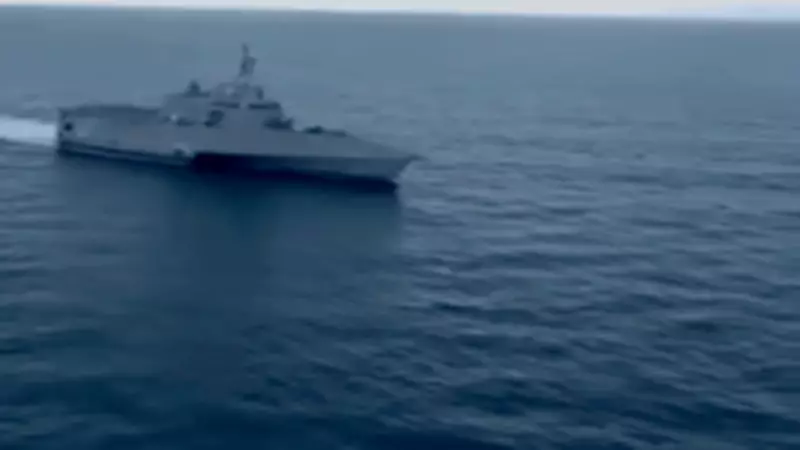
The United States Navy has released a groundbreaking video showcasing the inaugural launch of its Low-cost Uncrewed Combat Attack System (LUCAS) drone from the flight deck of the USS Santa Barbara, stationed in the Arabian Gulf. This historic event underscores the escalating significance of inexpensive, one-way attack drones in contemporary military engagements, particularly amid the ongoing US-led campaign against Iran.
First Combat Deployment in Operation Epic Fury
According to the United States Central Command (CENTCOM), the LUCAS drone was first deployed in combat during Operation Epic Fury. In this operation, American and Israeli forces executed coordinated strikes targeting key Iranian military assets. These included command-and-control facilities, air defense systems, missile launch sites, and drone bases associated with the Islamic Revolutionary Guard Corps.
CENTCOM described the LUCAS system as a low-cost, one-way attack drone modeled after Iran's own Shahed drones. In a statement on social media platform X, the command emphasized, "These low-cost drones, modelled after Iran’s Shahed drones, are now delivering American-made retribution." The strikes were part of a broader campaign authorized by US President Donald Trump and Israeli Prime Minister Benjamin Netanyahu, aimed at dismantling strategic Iranian military infrastructure.

What is the LUCAS Drone?
The Low-cost Uncrewed Combat Attack System (LUCAS) is a small, expendable drone engineered for one-way attack missions, drawing direct inspiration from the Iranian Shahed-136 drone. Developed by SpektreWorks, a defense technology firm based in Phoenix, Arizona, the drone was first publicly revealed in July 2025. With an estimated cost of around $35,000 per unit, it represents a dramatic reduction in expense compared to traditional military aircraft or cruise missiles.
For context, the MQ-9 Reaper drone costs between $20 million and $30 million, though it is reusable and more advanced. The affordability and expendable nature of LUCAS enable mass production and deployment in swarm attacks, designed to saturate and overwhelm enemy defenses.
Reverse-Engineered from Iranian Technology
US defense officials have disclosed that the LUCAS drone was developed through reverse-engineering captured Iranian drones, particularly the Shahed-136 platform. The Shahed drone has emerged as a cornerstone of Iran's military strategy, utilized extensively in conflicts across the Middle East and the Russia-Ukraine War. By analyzing these drones, American engineers created a similar low-cost platform with enhanced technology and modular systems.
How the LUCAS Drone Operates
The LUCAS drone features an open-architecture design, allowing for customization of payloads and onboard systems based on mission requirements. Its versatile capabilities include:
- One-way strike missions
- Surveillance and reconnaissance operations
- Communications relay functions
- Target drone roles for training exercises
Launchable from ground vehicles, trucks, or ships, the drone operates at medium altitudes over extended ranges. A key advantage is its logistical simplicity; it requires minimal specialized training for operators, facilitating rapid deployment in dynamic combat environments.
Iran's Shahed Drone: A Low-Cost Threat
Iran's Shahed-136 drone, a delta-winged loitering munition, can fly to a target area before diving and detonating its explosive payload. Analysts at the Center for Strategic and International Studies estimate it has a range of roughly 1,000 miles, speeds of about 114 miles per hour, and carries a warhead weighing between 66 and 123 pounds. Costing between $20,000 and $50,000 per unit, it provides an economical means to inflict significant damage.
Experts note that the affordability of such drones allows for large-scale simultaneous launches, forcing adversaries to expend far costlier interceptor missiles. Iran has deployed numerous drones against targets in Kuwait, Qatar, Saudi Arabia, Bahrain, and the United Arab Emirates, with some strikes impacting airports, hotels, ports, and residential buildings despite interceptions.

America's 'Affordable Mass' Strategy
In response, the United States is adopting an "affordable mass" strategy, focusing on deploying large quantities of inexpensive autonomous weapons. The Pentagon is expanding domestic drone manufacturing under the Drone Dominance Program, a $1 billion initiative authorized by the One Big Beautiful Bill Act of 2025. This program aims to scale up production of swarm-capable drones, with a goal to procure over 300,000 domestically produced weaponized drones by 2027 while reducing costs.
Operation Epic Fury, with daily costs estimated at $900 million and initial expenses of about $3.7 billion in the first 100 hours, highlights the financial impetus for low-cost alternatives. By leveraging systems like LUCAS, the US military seeks to diminish reliance on expensive missiles and aircraft while maintaining strategic strike capabilities.
The launch of the LUCAS drone from a naval carrier marks a pivotal moment in modern warfare, signaling a shift towards cost-effective, high-volume drone tactics in global military confrontations.





