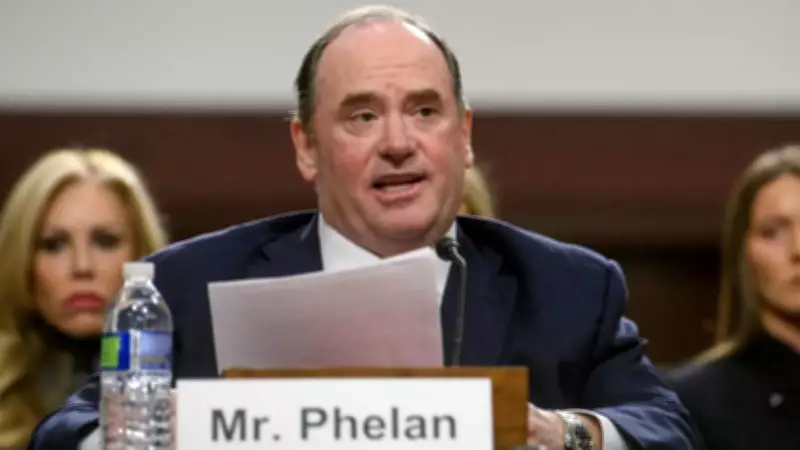
US Navy Secretary John Phelan Resigns Abruptly Amid Pentagon Leadership Shake-Up
The Pentagon announced on Wednesday that US Navy Secretary John Phelan has stepped down with immediate effect, marking the first departure of a military service chief during Donald Trump's second term. This move represents the latest in a series of significant leadership changes at the Department of Defense, signaling a period of transition within the nation's top military ranks.
Sudden Departure Without Explanation
Pentagon spokesperson Sean Parnell confirmed the unexpected resignation, stating that Phelan was "departing the administration, effective immediately." Parnell added, "We are grateful to Secretary Phelan for his service to the Department and the United States Navy." Notably, no specific reason was provided for this sudden resignation, leaving questions about the circumstances surrounding his exit.
Phelan's departure is particularly striking as he had appeared publicly just one day earlier at a Navy conference in Washington. During that event, he addressed sailors and industry leaders, discussing critical matters such as shipbuilding priorities and budget allocations for the naval force.

Hung Cao Takes Over as Acting Navy Chief
Hung Cao, a former Navy combat officer and political candidate backed by former President Trump, will assume the role of acting Secretary of the Navy. Cao brings extensive military experience to the position, having served as a 25-year Navy veteran with deployments in Iraq, Afghanistan, and Somalia.
Prior to this appointment, Cao had run unsuccessful campaigns for both the US Senate and House of Representatives in Virginia. Since becoming undersecretary, he has been known for supporting controversial initiatives, including efforts to reinstate service members who refused COVID-19 vaccination mandates.
Part of Broader Pentagon Reshuffle
Phelan's exit contributes to a growing list of top-level changes at the Pentagon in recent weeks. Defense Secretary Pete Hegseth has removed several senior military leaders, including the Army's top officer General Randy George, along with other generals and admirals.
Earlier high-profile dismissals included Admiral Lisa Franchetti and General Charles "CQ" Brown Jr., reflecting a broader shake-up in military leadership that has been unfolding since early 2025. These changes suggest a significant restructuring of command within the Department of Defense.
Exit Comes Amid Escalating Regional Tensions
The leadership transition occurs during a period of heightened tensions in the strategically vital Strait of Hormuz. Recent attacks on commercial vessels and the US enforcement of a naval blockade have raised serious concerns about the stability of a fragile ceasefire with Iran.
The US Navy has been actively involved in enforcing a blockade of Iranian ports and targeting vessels linked to Tehran, even after extending the truce. Iran has criticized these actions as violations of ceasefire terms and has yet to commit to fresh negotiations.
With multiple US aircraft carriers currently deployed in or heading to the Middle East, the US Navy remains central to any potential escalation should diplomatic efforts fail. The service maintains a strong operational presence in key global waterways, including the Strait of Hormuz and surrounding maritime routes, underscoring its critical role in regional security dynamics.