

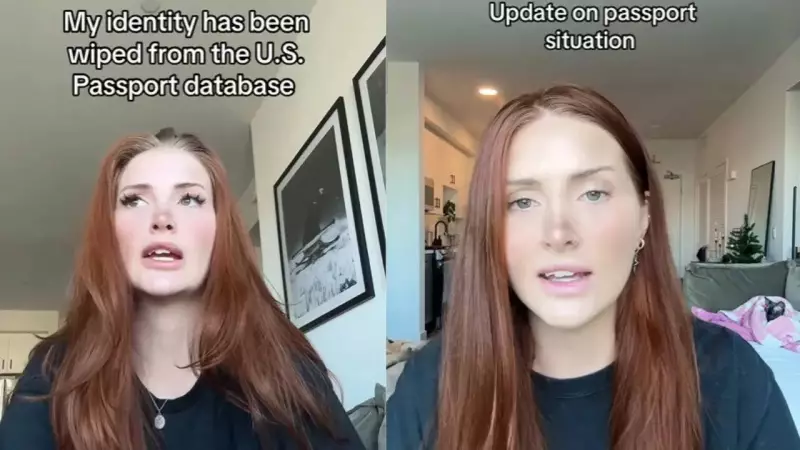
Alexis Rose faces a disturbing reality. The registered nurse and prominent transgender activist, known online as @travelingnurselex, claims federal systems erased her existence. Her story raises urgent questions about how recent government actions affect transgender individuals directly.
A Sudden Midnight Notification
Rose first noticed something wrong in the early hours of December 19, 2025. At 2:17 a.m. in Los Angeles, she received a stark notification. It informed her that authorities revoked her Global Entry access without warning.
The message stated she no longer met the program's requirements. Global Entry, managed by US Customs and Border Protection, allows pre-approved travelers faster entry into the United States. It includes automatic TSA PreCheck access. Eligibility typically depends on clean criminal records, valid identification, and passing security checks.

No Clear Reason for Revocation
Rose insists none of the standard disqualifiers apply to her situation. She has never faced felony charges. Her passport remains valid and unexpired. She highlighted one particular eligibility condition that felt especially relevant given the timing.
"And one of the last things on the eligibility list was not under investigation for terrorism," Rose noted pointedly.
Connecting Dots to Federal Actions
The activist directly links her Global Entry revocation to her advocacy work. She points to events unfolding the same day her access disappeared. US Attorney General Pam Bondi sent a letter to the FBI that day. The letter requested labeling pro-trans activists as domestic terrorists.
This development followed earlier Justice Department instructions. In December, the department told the FBI to intensify investigations into what it calls domestic terrorist organizations. This category now includes groups promoting what the administration terms radical gender ideology.
Bondi issued a memorandum on December 4 directing prosecutors and law enforcement to act under NSPM-7. This refers to President Donald Trump's September directive ordering investigations into domestic extremist groups.
More Than Online Activism
Rose emphasizes her activism extends beyond social media. She worked with the ACLU during the US vs. Skrmetti case. She has a transgender partner and sister. Many of her friends identify as transgender. Professionally, she provides gender-affirming care for trans youth as a healthcare provider.
"So as many of you guys know, I am a pro trans activist," Rose explained. "I have worked with ACLU during the US vs. Skrmetti case. I have a trans partner. I have a trans sister, I am blessed to have many trans friends and I have worked as a healthcare provider, providing gender affirming care for trans youth."
A Deeper System Failure Emerges
Initially, Rose thought the Global Entry issue might be a simple clerical error. Following advice from attorneys and federal contacts, she applied to renew her passport online. Her current passport expires later this year. What happened next shocked her more deeply.
"I was then told that no one with my identity was found anywhere in the US passport system," Rose revealed.
She contacted her congressional representative's office immediately. A field staffer there told her the notice was highly unusual. Some people get removed from the system when passports are mistakenly marked lost or stolen. But Rose's case differed fundamentally.
"That is not what happened to me," Rose stressed. The message she received explicitly stated no record of her identity existed in the system at all.
Broader Policy Changes Create Context
Rose's experience occurs against a backdrop of escalating federal actions. In December 2025, the Department of Health and Human Services announced a ban on all forms of transgender healthcare for youth. The department also plans to cut public funding to hospitals providing such care.
The proposed rules aim to restrict puberty blockers, hormone therapy, and surgical interventions for transgender children. They would bar Medicaid and Medicare funding for these treatments.

According to the Associated Press, twenty-seven states already have laws restricting or banning trans healthcare for youth. Only fifteen states maintain protections. These regulatory changes overlap with recent House legislation. HR 498 seeks to ban Medicaid coverage for transgender-related care entirely.
Seeking Answers and Fearing Silence
Rose now waits for an in-person appointment with the US passport agency scheduled for Tuesday. She hopes this meeting will finally provide clarity about what happened to her records.
In a follow-up video, she expressed uncertainty about whether authorities might confiscate her passport. She wonders if she will ever travel freely again. Rose ended her initial video with a heartfelt plea to her substantial audience of over 376,000 followers.
"If I go dark, I need you guys to be really loud," she urged them.
As of now, Rose has received no official explanation. Nobody has told her why Global Entry access disappeared. Nobody explains why her identity vanished from passport systems. This leaves her questioning how two separate government agencies targeted her simultaneously. She wonders what this coordinated action means for her future and for other activists like her.





