

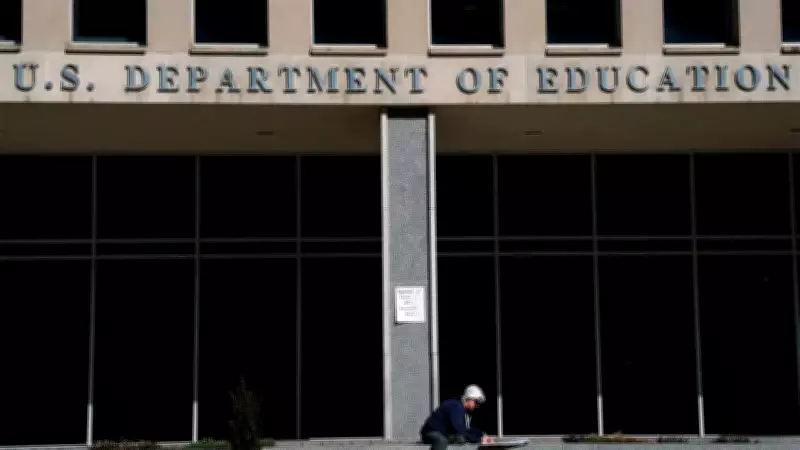
The United States Department of Education has formally unveiled a significant Notice of Proposed Rulemaking (NPRM) aimed at overhauling the federal student loan system. This initiative is a direct implementation of provisions within President Trump's Working Families Tax Cuts Act, signaling a major shift in how higher education financing is managed at the federal level.
Core Objectives of the Proposed Rule
The proposed regulatory changes are designed with three primary goals in mind. First, to actively reduce the soaring costs associated with higher education across the nation. Second, to dramatically simplify the complex landscape of loan repayment options available to borrowers, which has long been a source of confusion. Third, to introduce strict, enforceable borrowing limits specifically for graduate and professional students, a move intended to address concerns about unsustainable debt.
Phasing Out Grad PLUS, Introducing Strict Caps
One of the most transformative elements of the proposal is the complete elimination of the Grad PLUS loan program. This program historically allowed graduate students to borrow up to the full cost of their attendance without a predefined ceiling. Lawmakers and officials have consistently argued that this system of unlimited borrowing has been a key driver behind the relentless inflation of graduate school tuition fees.

Under the new framework, beginning in July 2026, new graduate students will face an annual federal loan limit of $20,500, with a strict lifetime aggregate cap set at $100,000. For professional students, such as those in medical or law schools, the limits will be higher but still defined: up to $50,000 per year, with a total lifetime limit of $200,000. The Department has highlighted that graduate borrowing now constitutes a disproportionately large share of the federal loan portfolio, especially within income-driven repayment plans. These new caps are explicitly designed to curb overborrowing, apply downward pressure on tuition inflation, and create a more sustainable system for both borrowers and taxpayers.
Furthermore, the proposed rule grants colleges and universities the authority to establish program-level loan caps that are even lower than the federal limits. This provision empowers institutions to tailor borrowing more precisely to the actual costs of specific programs and the expected earning potential of their graduates.
A Streamlined, Two-Option Repayment System
In a bid to end borrower confusion, the proposed rule consolidates multiple existing repayment plans into just two primary options. The first is a tiered standard repayment plan, which would feature fixed terms of 10, 15, 20, or 25 years, with the term length directly tied to the borrower's total loan balance.
The second is a single, unified income-driven repayment plan, to be known as the Repayment Assistance Plan. Under this new option, monthly payments will be calculated based strictly on a borrower's demonstrated ability to pay. Critically, the Department has stated that borrowers who maintain a record of on-time payments under this plan will be shielded from interest accumulation that would otherwise cause their loan balance to grow.
Enhanced Borrower Protections and Rehabilitation
The proposal also includes a key enhancement to borrower protections by allowing individuals to rehabilitate a defaulted federal student loan not once, but twice. Previously, borrowers were granted only a single opportunity for rehabilitation. This change is intended to provide a more robust safety net, helping more individuals return to good standing and resume manageable repayment.
The Path Forward: Public Comment and Finalization
The proposed rule is now open for public comment for a period of 30 days, with all submissions due by March 2, 2026. Comments must be submitted exclusively through the official Regulations.gov website; the Department will not accept submissions via fax or email. Following this comment period, the Department will review all feedback before proceeding to finalize the regulations.

This NPRM was developed through the Reimagining and Improving Student Education (RISE) negotiated rulemaking committee, which reached a consensus in November 2025. The committee included a diverse array of stakeholders, such as representatives from higher education institutions, legal aid organizations, business leaders, students, and taxpayer advocates. Under federal law, the Department was obligated to publish the proposed rule using the language agreed upon by this committee.
This rule marks the first of three planned regulatory actions intended to fully implement the changes mandated by the Working Families Tax Cuts Act to the Higher Education Act, setting the stage for further reforms in the near future.





