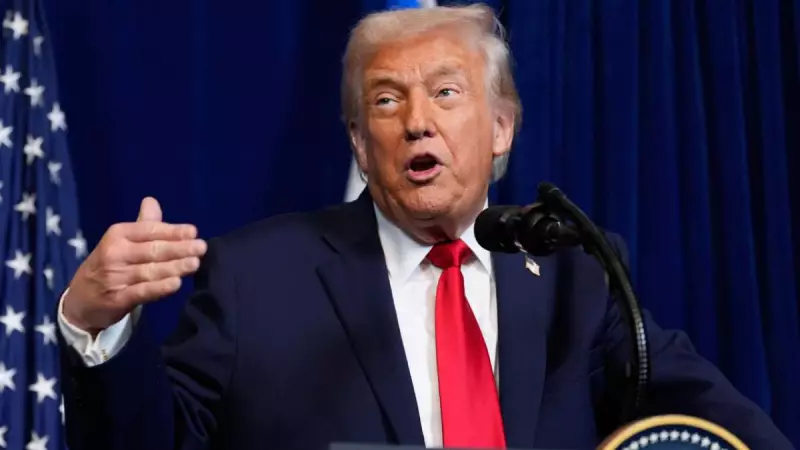
Former United States President Donald Trump has issued a direct and forceful warning to the Iranian government, stating the US is 'ready to go' if Tehran uses force against its own citizens protesting the death of a young woman. The warning, made on his social media platform Truth Social, has escalated diplomatic tensions, drawing a sharp and immediate rebuke from a top advisor to Iran's Supreme Leader Ayatollah Ali Khamenei.
Trump's Stark Warning to Tehran
On January 2, 2026, Donald Trump posted a message that reverberated across global diplomatic circles. He directly addressed the Iranian leadership, cautioning them against a violent crackdown on ongoing protests within the country. 'The USA is ready to go,' Trump declared, emphasizing the potential for a swift and severe American response.
The context for this warning stems from renewed unrest in Iran, reportedly fueled by public outrage over the death of a woman in custody. Trump's statement framed the issue as a matter of human rights and freedom, positioning the US as a protector against state-sponsored violence. This intervention by a former president, who remains a dominant figure in American politics, adds a complex layer to the already strained US-Iran relationship.

Iran's Defiant Response from Khamenei's Camp
The reaction from Tehran was swift and unyielding. A senior advisor to Supreme Leader Ayatollah Ali Khamenei, whose identity was linked to the leadership's inner circle, fired back at Trump's comments. The advisor dismissed the warning as 'interference in Iran's internal affairs' and a provocative act.
In a strongly worded retort, the advisor accused the US, and Trump by extension, of hypocrisy. The response highlighted America's own domestic challenges and historical foreign policy actions, suggesting it had no moral standing to lecture Iran on governance or human rights. This exchange underscores the deep-seated hostility and lack of diplomatic trust between the two nations, a rift that has persisted for decades.
Escalating Tensions and Global Implications
This public spat between a former US president and Iran's supreme leadership marks a significant escalation in rhetoric. It occurs against a backdrop of:
- Ongoing Domestic Unrest: Protests within Iran continue to challenge the regime, focusing on social freedoms and state accountability.
- Stalled Nuclear Talks: Efforts to revive the Joint Comprehensive Plan of Action (JCPOA), or Iran nuclear deal, remain in a deadlock.
- Regional Proxy Conflicts: Both nations are engaged in indirect confrontations across the Middle East.
Trump's re-entry into foreign policy discourse on this issue complicates the current Biden administration's stance. It raises questions about the continuity of US policy and the potential for a more aggressive posture, regardless of who occupies the White House. For Iran, the public warning is seen as an affront to its sovereignty, likely hardening its position both domestically and in international negotiations.
The international community is watching closely, concerned that such heated exchanges could derail any fragile progress in diplomacy or, worse, lead to miscalculations. The situation remains volatile, with the potential for internal protest movements in Iran to become a flashpoint for broader international conflict.