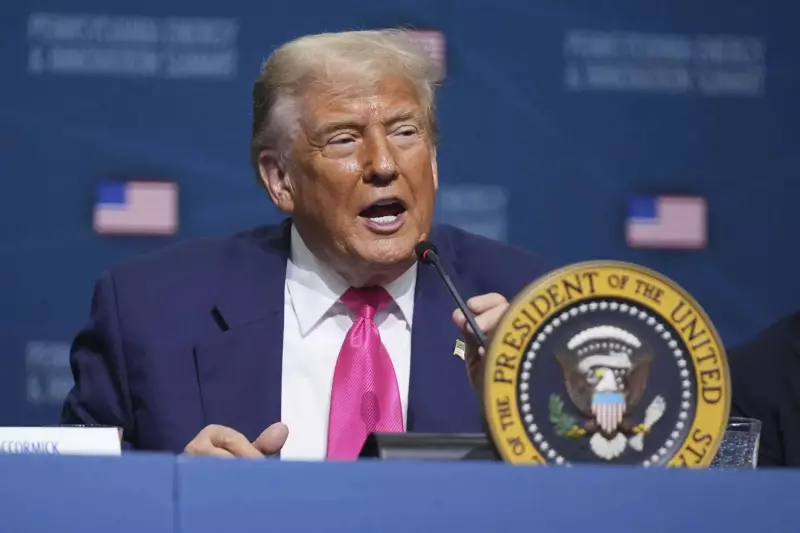
The landscape of academic research in the United States faced a seismic shift following the executive orders and policy changes implemented by former President Donald Trump's administration. These moves, which sharply reduced federal research funding and narrowed the scope of permissible study topics, sent shockwaves through universities nationwide, including those in Pittsburgh that are heavily reliant on such grants.
Financial and Employment Fallout in Allegheny County
The immediate impact was starkly financial. Universities were forced to implement hiring freezes, pause admissions for Ph.D. programs, and resort to layoffs. According to estimates from the Science and Community Impacts Mapping Project (SCIMaP), Allegheny County alone lost approximately $24 million in federal research money and 104 jobs. The situation threatened to worsen if proposed budget reductions for key agencies like the National Institutes of Health (NIH) and the National Science Foundation (NSF) were approved.
A Chilling Effect on Academic Freedom and Research
Beyond the balance sheets, researchers argue the cuts struck at the heart of academic freedom—the core principle that allows scholars to pursue knowledge without political interference. Some professors pointed to agreements between universities like Columbia, Cornell, and Northwestern and the federal government, suggesting these deals compromised academic integrity to restore funding.

The Trump administration defended its actions as necessary to restore trust in higher education by countering "left-wing ideological capture" and removing perceived discrimination within Diversity, Equity, and Inclusion (DEI) policies. This stance created direct challenges for researchers studying societal disparities.
Researchers Forced to Camouflage or Abandon Work
Miranda Yaver, an assistant professor of public health at the University of Pittsburgh, studies health insurance disparities. After the executive order targeting DEI, she felt compelled to abandon plans to apply for grants from the NSF and the Agency for Healthcare Research and Quality. "There is some research that can be camouflaged, but my work is hard to hide," Yaver stated. Failed attempts to secure private foundation support left her with no research funding from next year, stalling projects that could benefit the healthcare industry.
Jeremy Berg, a former NIH institute director now at Pitt, confirmed that researchers are continuing important work but often must alter the language in their grant proposals to align with new federal priorities. This linguistic gymnastics was experienced by Michael Gold, a neurobiology professor at Pitt. A grant designed to support trainees from marginalized groups in pain research had to be rewritten to fit revised NIH priorities emphasizing merit-based training, autism research, and "scientifically justified" disparities studies. The NIH clarified that research based on concepts like "systemic racism" would not meet its standards if poorly defined.
Gold warned that such restrictions not only curb academic freedom but also critically slow progress on research with real-world impact. "The loss of momentum on these topics has generational consequences," he emphasized.
Universities' Cautious Response and a Warning
In response to the funding climate, university leadership has largely avoided direct public criticism of the federal government. While some have joined lawsuits against proposed cuts or issued broad statements supporting higher education, many faculty members believe a more robust defense is needed.
Berg issued a clear warning: universities risk eroding the trust of their academic communities if they fail to actively defend foundational principles. "Universities are running the risk of appearing to agree to anything for the sake of funding," he said, highlighting the precarious position institutions now find themselves in as they navigate the intersection of politics, finance, and free inquiry.