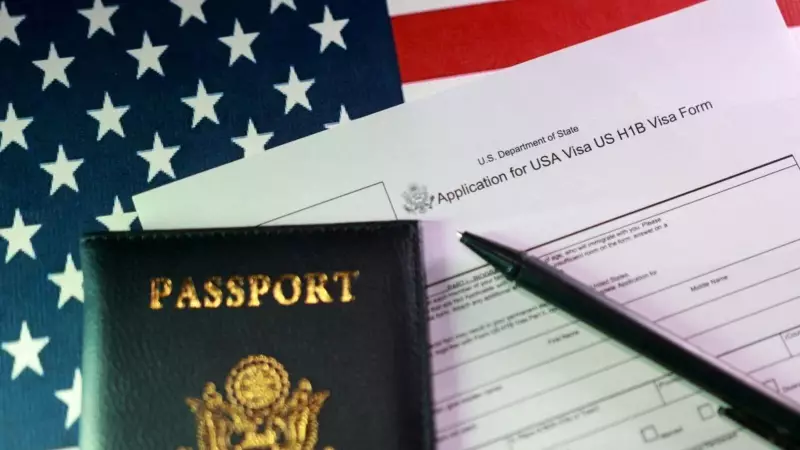
In a significant development impacting the Indian diaspora, numerous Indian immigrants in the United States received notifications in December last year that their H-1B and H-4 visas had been prudentially revoked by the US government. This action coincides with stricter immigration measures announced by the Trump administration.
What Triggered the Prudential Visa Revocations?
According to a report by Firstpost, multiple Indian-origin visa holders were notified on December 15 about the revocation. This came just a day after the administration declared it would implement strict social media screening for all H-1B visa holders and their dependents. Previously, such vetting was applied only to students and exchange visitors.
The H-1B visa is a non-immigrant visa that allows US companies to employ foreign workers in specialty occupations, while the H-4 visa is issued to their immediate dependents, typically spouses and children.

Understanding Prudential Visa Revocation
Petula McShiras, a Senior Associate Attorney at Kolko & Casey, explains that prudential visa revocation is a discretionary action by the US Department of State. It is based on certain conditions or suspicions without a formal determination of the visa holder's ineligibility.
Crucially, McShiras clarifies that receiving this notice does not immediately affect the legal status of an H-1B or H-4 holder currently in the US. However, it jeopardizes their ability to re-enter the country after travel or obtain future visas. The revocation becomes effective only upon the individual's departure from the United States.
Common Reasons for Revocation and Steps to Take
McShiras states that prudential revocation is often applied if an individual has been charged with specific offenses, such as DUI (Driving Under the Influence) or fraud-related cases. It can occur even if the case is pending or later resolved, as it is triggered by derogatory information warranting further scrutiny.
For affected individuals, McShiras advises the following:
- If you are an H-1B holder facing or with a history of criminal charges, consult an immigration attorney before any international travel.
- Consult an attorney before extending your H-1B status, as there is an increased trend of biometrics notices linked to criminal charges.
Big Tech Reliance on H-1B and Broader Immigration Shifts
This incident unfolds against a backdrop of heavy reliance on the H-1B program by major US tech firms. An analysis by the National Foundation for American Policy (NFAP) of USCIS data for FY25 revealed that companies like Amazon, Google, Meta Platforms, and Microsoft had the most approved H-1B petitions for initial employment.
The Trump administration has initiated several immigration reforms. In September last year, a proclamation titled “Restriction on Entry of Certain Nonimmigrant Workers” proposed changes to the H-1B program, including a one-time $100,000 fee on new applications. Further actions included suspending Green Card and citizenship applications for individuals from 19 “countries of concern” and pausing all asylum applications.
In October, the US also rolled back a Biden-era policy that allowed automatic extensions for Employment Authorization Documents (EADs) for certain foreign workers.
Given that 66% of the approximately 4.8 million Indian Americans (per US Census Bureau data till 2022) are immigrants, these policy shifts are poised to have a profound impact on the community, making awareness and legal counsel more critical than ever.