The initial euphoria in Venezuela following the dramatic capture of President Nicolás Maduro by US forces is rapidly giving way to a sobering reality. The United States administration, led by President Donald Trump, has made it clear that an immediate restoration of democracy is not its primary objective, focusing instead on strategic stability and specific policy changes from the remaining regime.
US Priorities: Stability Over Swift Elections
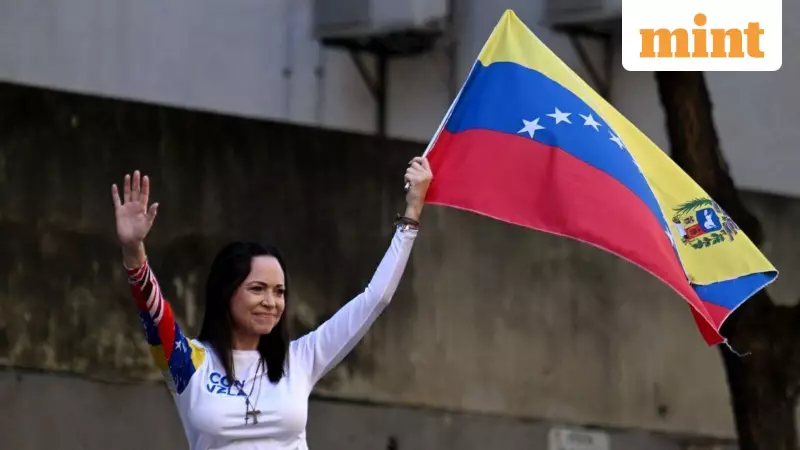
In his address, President Trump justified the military action by citing the Maduro regime's role in drug trafficking, sending criminal gangs to the US, and seizing American oil assets. Notably absent was any mention of reinstating democratic processes or holding new elections. Trump stated the US would manage the country indefinitely until a "safe, proper and judicious transition" could be arranged, explicitly casting doubt on a major role for Nobel Peace Prize-winning opposition leader María Corina Machado, whom he deemed lacking in popularity.
Echoing this stance, US Secretary of State Marco Rubio, on January 5, 2026, explicitly played down hopes for a rapid democratic shift. Appearing on CBS's "Face the Nation," Rubio called the expectation for instant elections "absurd," noting that the Chavismo system has been entrenched for 27 years. He outlined Washington's immediate goals under the new interim president, Delcy Rodríguez: halting drug trafficking, stopping the flow of gang members, removing Iranian and Cuban influence, and ensuring Venezuela's oil wealth benefits its people, not "pirates and adversaries of the United States."

A Regime Intact, A People Anxious
For millions of Venezuelans, both at home and in the diaspora, the persistence of the old guard is a source of deep anxiety. While Maduro is gone, the repressive apparatus he led remains firmly in place. Moisés Naím, a former Venezuelan minister and analyst, captured the mood, stating that Venezuelans alternate between euphoria and disappointment as "the guys with guns and the structure of guns and corruption is still running the show."
Rafael Banega, a community activist in Caracas, expressed a widespread sentiment that any regime softening to please Washington would feel like "colonial submission," denying ordinary citizens a voice in their future. The Venezuelan constitution mandates a new presidential election within 30 days if the president's absence is permanent. However, the regime-stacked Supreme Court has ruled it needs to study the matter due to the "extraordinary circumstances," effectively placing no time limit on Rodríguez's interim rule.
International and Opposition Reaction
The US strategy has drawn mixed reactions. Panama's President José Raúl Mulino, a strong Maduro critic, questioned the moral authority of Delcy Rodríguez—a key Maduro loyalist—to lead a democratic transition. Within Venezuela's opposition, figures like Pedro Mario Burelli praised Maduro's capture but labelled the plan to run Venezuela from Washington via regime members as "bizarre" and "unacceptable."
Many are dismayed that Trump did not push for recognising the results of the disputed 2024 election, which the West says was won by opposition candidate Edmundo González. María Corina Machado has remained publicly silent, with allies suggesting she has little choice but to trust the US process. Former political prisoner Freddy Guevara expressed cautious hope, trusting the US to pressure the regime into negotiations leading to elections, but noted the key lies in whether hardliners like Defense Minister Vladimir Padrino and Interior Minister Diosdado Cabello realise their invincibility is over.
Experts like former US diplomat Larry Gumbiner see the administration clearly prioritising stability. The plan appears to be maintaining the Maduro government structure without Maduro, contingent on it allowing US oil firms to rebuild the sector and ceasing support for illicit activities. The continued presence of the US fleet serves as leverage for compliance. The deep loyalty of Venezuela's security forces, built on years of corruption, presents a significant hurdle to any rapid democratic transition forced from outside.