

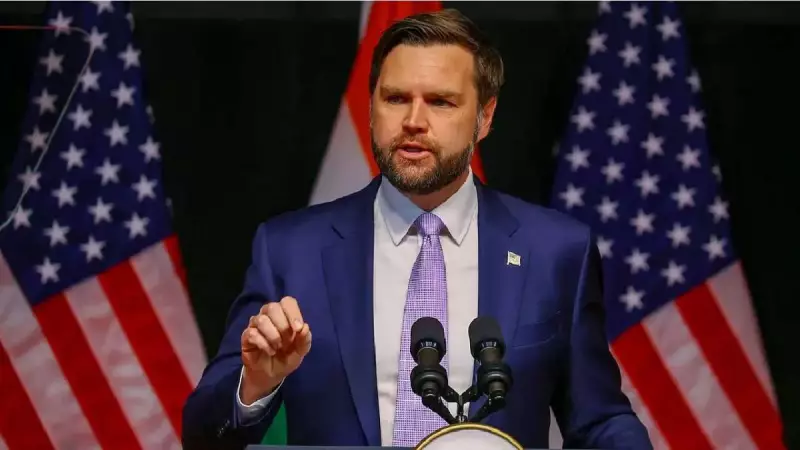
In a significant and hardline foreign policy statement, United States Senator JD Vance has publicly defended the potential use of American military force in Venezuela. The Ohio Republican, a close ally of former President Donald Trump, outlined two primary justifications for such an intervention: the South American nation's role as a hub for international drug trafficking and the Venezuelan government's history of expropriating American oil assets.
The Core Justifications for Intervention
Senator Vance's arguments center on what he frames as direct threats to US security and economic interests. He pointed to Venezuela's alleged collaboration with drug cartels, which he claims funnel narcotics, particularly fentanyl, toward the United States. This, Vance asserts, contributes directly to the devastating opioid crisis affecting American communities.
Furthermore, the senator highlighted the long-standing dispute over oil assets. He referenced the actions of former Venezuelan President Hugo Chávez and his successor, Nicolás Maduro, who nationalized major oil projects. This led to the expropriation of billions of dollars in assets from American corporations like ConocoPhillips and ExxonMobil. Vance framed this not merely as an economic loss but as an act of aggression against US property rights that demands a firm response.

Vance's Political Alignment and Timing
JD Vance's stance aligns closely with the more assertive and unilateral foreign policy approach associated with Trump's "America First" doctrine. His comments come amid ongoing tensions between the US and the Maduro regime. The US has maintained severe economic sanctions on Venezuela's crucial oil sector for years, aiming to pressure Maduro into political concessions.
Vance's defense of military action represents one of the most hawkish positions taken by a prominent US political figure regarding Venezuela in recent times. It signals a potential foreign policy direction should Trump return to the White House after the 2024 election, with Vance being a speculated vice-presidential candidate.
Geopolitical Repercussions and Regional Stability
Advocating for military intervention in Venezuela carries profound implications for regional stability in Latin America. Such a move would likely face fierce opposition from neighboring countries and could destabilize the region further. It also risks creating a larger humanitarian crisis in a nation already suffering from severe economic collapse and mass emigration.
Analysts note that this position contrasts with some current diplomatic efforts, which have seen the US government grant limited sanctions relief in exchange for electoral guarantees from Maduro's administration. Vance's argument fundamentally rejects a purely diplomatic path, emphasizing coercion and force as necessary tools.
The senator's statements have ignited a fresh debate on the limits of US power projection and the appropriate response to state-sponsored activities deemed hostile. While the Biden administration has shown no indication of pursuing military action, Vance's vocal advocacy keeps this controversial option in the geopolitical discourse, setting the stage for future policy battles in Washington.






