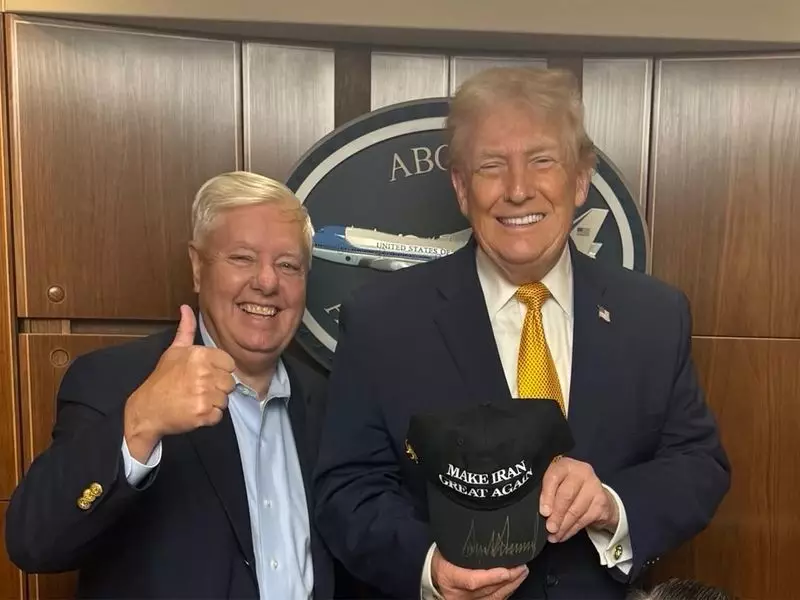
In a dramatic escalation of rhetoric, a prominent United States senator has issued a chilling public warning to Iran's Supreme Leader, directly linking the fate of the Islamic Republic's top cleric to the potential return of former President Donald Trump to power. The stark statement comes as Iran grapples with a fresh wave of internal unrest.
A Stark Warning from Capitol Hill
Republican Senator Lindsey Graham, a known foreign policy hawk and close ally of Donald Trump, delivered the blunt message aimed at Ayatollah Ali Khamenei. Graham stated unequivocally that if Trump is re-elected as President in the upcoming 2024 elections, the Iranian leader's life could be in grave danger. The senator's comments were made against the backdrop of ongoing nationwide protests within Iran, which were reportedly triggered by a severe water shortage in the southwestern Khuzestan province.
The protests, which have seen citizens taking to the streets in several cities, have been met with a forceful response from Iranian security forces. Graham explicitly connected the domestic crackdown to his warning, suggesting that the regime's actions against its own people would have severe consequences.

The Context of Protests and Regime Response
The current wave of demonstrations adds to a history of public discontent in Iran. The senator's warning references the broader context of the Iranian government's handling of dissent. He accused the regime of 'killing your own people' and 'starving your own people,' framing his threat as a direct response to these alleged internal atrocities.
This is not the first time Senator Graham has adopted a fiercely confrontational tone towards Iran. During Trump's presidency, Graham was a vocal supporter of the 'maximum pressure' campaign, which included the unilateral withdrawal from the 2015 nuclear deal and the imposition of crippling economic sanctions. His latest remarks signal a continuation of that hardline approach and suggest the kind of foreign policy that could be revived should Trump secure a second term.
Implications for US-Iran Relations and Regional Stability
The public threat from a senior US lawmaker is highly unusual and is certain to further poison the already non-existent diplomatic relations between Washington and Tehran. It represents a significant verbal escalation that moves beyond policy criticism to a personal threat against a nation's head of state.
Analysts suggest that such rhetoric could have several immediate effects:
- Emboldening protestors within Iran by showcasing high-level international attention on their plight.
- Provoking a sharp and aggressive response from Iranian leadership, potentially leading to increased regional provocations.
- Influencing the domestic political debate in the United States regarding its strategy towards Iran.
The statement also casts a long shadow over the future of the Iran nuclear deal negotiations. With the Biden administration attempting to revive the agreement, comments like Graham's underscore the deep political divisions in the US regarding engagement with Tehran. They highlight the fragile and temporary nature of any diplomatic progress, which could be swiftly overturned by a change in administration.
The ultimate impact of Graham's warning hinges on the volatile arena of American electoral politics. His message is clearly predicated on a Trump victory in 2024. Until then, it stands as a potent symbol of the hawkish, regime-change-oriented policy favored by a powerful faction within the Republican Party. For the people of Iran, it adds another layer of complexity to their struggle, intertwining their domestic grievances with the high-stakes game of international power politics.