

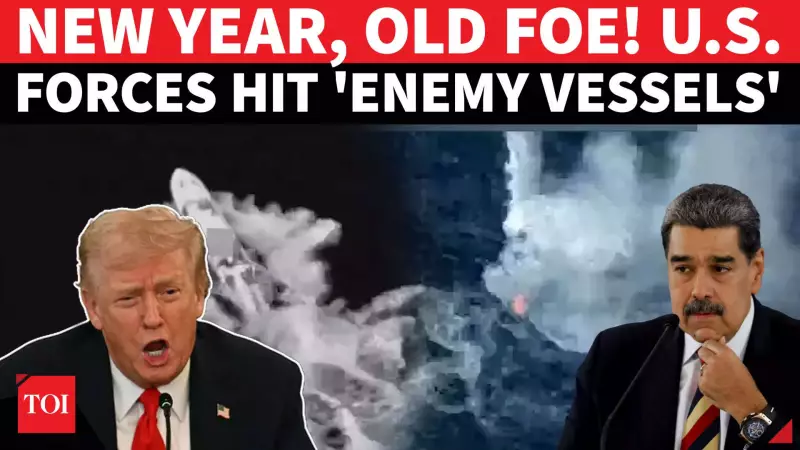
The new year began with a deadly escalation at sea as the United States military conducted a series of strikes in the Atlantic region, resulting in the deaths of at least eight individuals over two days. The operations, confirmed by the US Southern Command, targeted what were described as suspected drug trafficking vessels operating in international waters.
Details of the Twin Strikes
The attacks, carried out on alleged 'enemy vessels' involved in narcotics trade, have left a grim toll. Survivors from the targeted boats are currently missing, prompting ongoing search and rescue operations by US forces. These latest incidents are not isolated but form part of a broader, aggressive maritime campaign initiated by the Pentagon.
Since the campaign's inception in September of last year, the cumulative death toll has risen sharply. Officials confirm that at least 115 people have been killed in these military actions aimed at disrupting drug smuggling routes, primarily in the Atlantic Ocean's international waters.

Political Fallout and Geopolitical Angle
The lethal strategy has not gone without significant criticism. In Washington, a growing number of lawmakers are raising serious concerns, questioning the legal and ethical grounds of the strikes and openly discussing potential war crime allegations. The operations, which involve firing on often civilian-crewed vessels, sit in a legal grey area of international maritime law.
Beyond the stated goal of combating drug trafficking, US officials have suggested a deeper geopolitical motive. The campaign is seen as a method to apply additional pressure on Venezuela and its President, Nicolás Maduro. By targeting vessels allegedly linked to drug networks that sometimes operate out of Venezuelan waters or with Venezuelan connections, the US is intensifying its multifaceted campaign against the Maduro government.
A Wider Context of Tension
This maritime offensive occurs against a backdrop of heightened global tensions. The news follows other dramatic reports from the Atlantic, including instances where Russian forces have assisted Venezuela-linked ships in evading US capture attempts. These events paint a picture of a new, volatile front in great-power competition, where the war on drugs intersects with broader strategic rivalries.
The human cost of this 'war at sea' is becoming increasingly difficult to ignore. With eight more lives lost in the first days of 2026 and over a hundred killed in just a few months, the Trump administration's hardline approach is facing mounting scrutiny both domestically and internationally. The coming weeks will likely see intensified debate over the rules of engagement and the long-term consequences of militarising the fight against narcotics in international waters.






