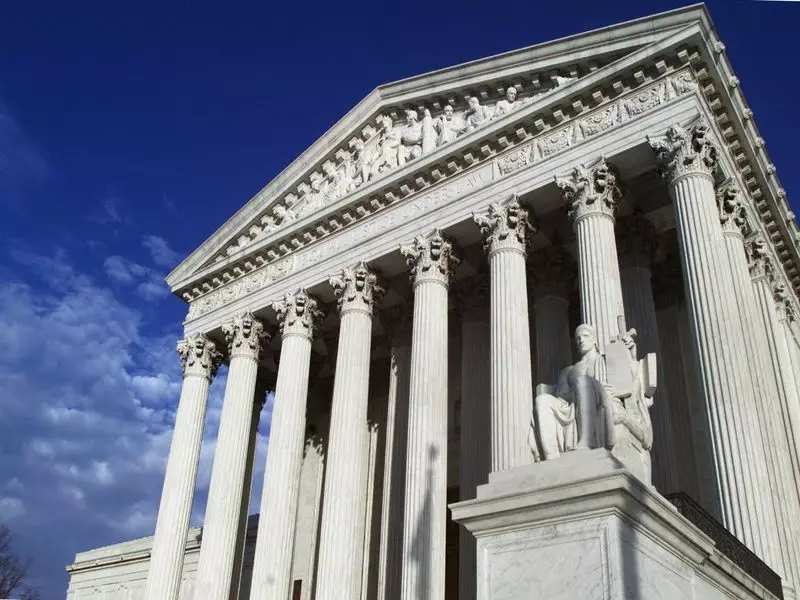
The United States Supreme Court has chosen to delay a crucial ruling on the legality of tariffs imposed during Donald Trump's presidency, a decision with significant implications for global trade partners, including India. The court did not issue an opinion in the high-stakes case before concluding its current term, leaving a cloud of uncertainty over billions of dollars in international commerce.
The Core of the Legal Battle
At the heart of the dispute are tariffs on steel and aluminum that were implemented in 2018 by the Trump administration. These levies were justified under Section 232 of the Trade Expansion Act of 1962, which allows the president to adjust imports on grounds of national security. The tariffs, set at 25% on steel and 10% on aluminum, affected numerous countries and triggered a wave of legal challenges and retaliatory measures worldwide.
The case before the Supreme Court, known as U.S. Steel Corp. v. United States, was brought by a group of American steel importers. Their central argument is that Section 232 unconstitutionally delegates legislative power from Congress to the President. They contend that the law provides the executive branch with overly broad authority, effectively allowing the White House to impose taxes without proper congressional oversight, which violates the separation of powers outlined in the U.S. Constitution.

Why the Delay Matters for India and Global Trade
The Supreme Court's decision to hold off on a ruling extends a period of legal and economic ambiguity. For India, which was initially hit by these tariffs and subsequently engaged in negotiations for exemptions, the outcome is of direct consequence. While some countries secured temporary deals, the fundamental legality of the tariffs remains unresolved, affecting long-term trade planning and investment in sectors reliant on these metals.
The Biden administration has defended the tariffs in court, arguing that the national security rationale is valid and that the law's delegation of power is constitutional. A ruling against the government could not only roll back these specific tariffs but also dramatically limit future presidents' ability to use Section 232 for trade policy, reshaping U.S. approach to trade disputes with China, the EU, and other major economies.
Implications and What Comes Next
The Supreme Court's silence means the tariffs will remain in effect for the foreseeable future, pending a potential ruling in its next term, which begins in October. This delay has several immediate effects:
- Continued Trade Uncertainty: Businesses in India and globally that import or export steel and aluminum must continue operating under the tariff regime, impacting costs and supply chains.
- Ongoing Legal Limbo: Lower court rulings that had questioned the tariffs' constitutionality remain on hold, freezing the judicial process.
- Diplomatic and Policy Hurdles: The unresolved case complicates ongoing trade discussions between the U.S. and its partners, as the fundamental tool of Section 232 remains under a legal cloud.
Legal experts suggest the court's delay could indicate deep divisions among the justices or a desire to craft a particularly nuanced opinion given the case's massive economic and constitutional implications. The decision, when it eventually comes, will set a precedent that reaches far beyond steel and aluminum, potentially redefining the balance of power in U.S. trade policy for decades. For India's exporters and policymakers, closely monitoring this American legal battle is now an essential part of navigating the complex landscape of international trade.