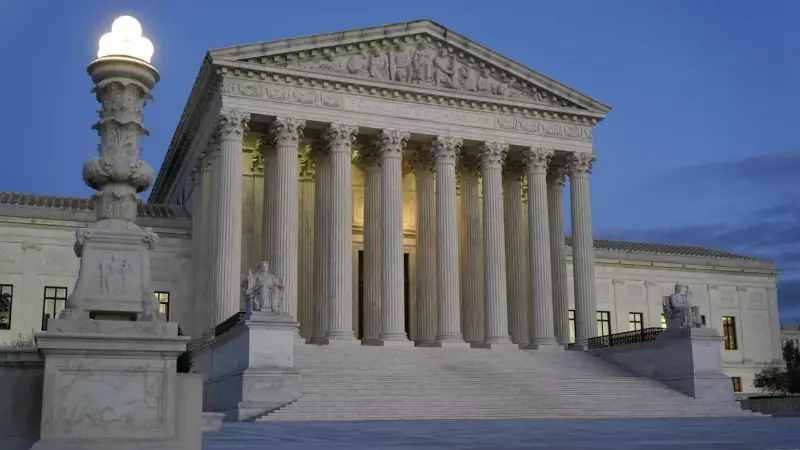
In a significant decision that reinforces a foundational American principle, the United States Supreme Court has declined to hear a challenge to the long-standing doctrine of birthright citizenship. This move effectively upholds the interpretation of the 14th Amendment, which grants citizenship to all persons born on US soil, regardless of their parents' immigration status.
The Legal Challenge and Its Origins
The case that reached the Supreme Court originated from a controversial policy during the administration of former President Donald Trump. In October 2018, Trump signed an executive order that sought to reinterpret the 14th Amendment. The order aimed to deny birthright citizenship to children born in the US to non-citizen parents and unauthorized immigrants.
This executive action sparked immediate legal and constitutional debates. Legal scholars and historians widely argued that the President lacked the unilateral authority to alter the meaning of a constitutional amendment through an executive order. The 14th Amendment, ratified in 1868 in the aftermath of the Civil War, clearly states: "All persons born or naturalized in the United States, and subject to the jurisdiction thereof, are citizens of the United States and of the State wherein they reside."

The specific challenge that the Supreme Court rejected was brought by a group of American citizens who were born to non-citizen parents. They argued that the Trump administration's policy created a cloud of uncertainty over their own citizenship status and violated their constitutional rights.
Supreme Court's Silent Verdict and Its Implications
By refusing to take up the case, the Supreme Court has left in place a lower court's ruling. The US Court of Appeals for the Ninth Circuit had previously ruled that the plaintiffs lacked legal standing to sue, as the executive order was never formally implemented as a regulation. More crucially, the Supreme Court's denial signals a reluctance to revisit the settled interpretation of the Citizenship Clause.
This decision carries profound implications. It reaffirms that birthright citizenship, also known as jus soli, remains a cornerstone of American law. Any future attempt to change this principle would require a monumental effort—either a constitutional amendment passed by Congress and ratified by the states, or a future Supreme Court willing to overturn more than a century of legal precedent.
The ruling also represents the definitive end of the legal pathway for the 2018 executive order. With the Supreme Court's refusal to intervene, the policy is effectively null and void, closing a chapter of immigration policy debate that began during the Trump presidency.
Broader Context and Global Perspective
The United States is one of fewer than 40 countries that practice unconditional birthright citizenship. Most nations in Europe and Asia follow jus sanguinis (right of blood), where citizenship is determined by that of one's parents. The American model has historically been viewed as a powerful symbol of the nation's inclusive identity, though it has periodically faced political challenges.
The Supreme Court's action, while procedural, sends a strong message about the stability of this constitutional right. It underscores that fundamental aspects of citizenship are insulated from shifting political winds and executive actions. For the millions of individuals who derive their citizenship from this clause, the Court's decision provides a renewed sense of security and constitutional validation.
In essence, the highest court in the United States has chosen not to open a Pandora's box of constitutional reinterpretation. By turning away this challenge, it has preserved a legal understanding that has defined American national identity for over 150 years.