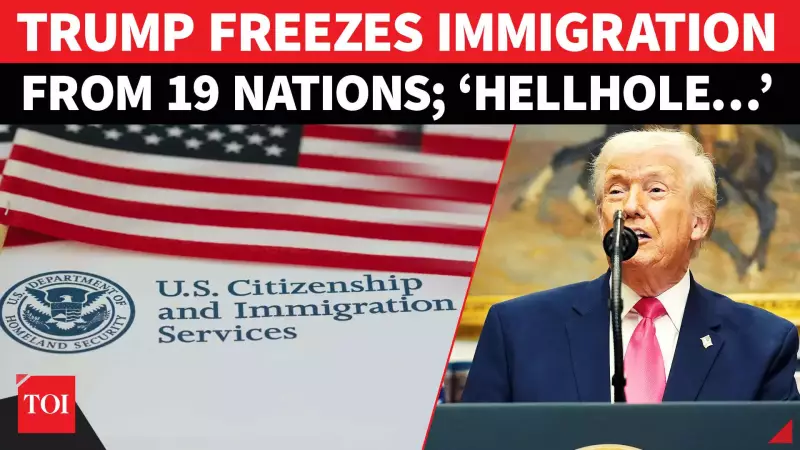
In a significant policy shift, the administration of US President Donald Trump has suspended all immigration applications from a list of 19 non-European countries. The move, announced on December 3, 2025, effectively freezes the processing of green cards and citizenship for nationals from these nations, citing heightened national security and public safety concerns.
Linking the Pause to Washington Attack
Officials have directly connected this sweeping immigration halt to the recent assault on National Guard members in Washington D.C. An Afghan suspect was arrested in connection with that attack, which appears to have served as a catalyst for the broader administrative action. The administration is framing this suspension as a necessary protective measure for the United States.
Expansion of Existing Restrictions
This new order represents a major expansion of immigration restrictions that were first introduced in June. The latest policy now specifically targets a group of 19 countries. The affected nations include Afghanistan, Somalia, Iran, Haiti, Libya, and Yemen, among others. The action has resulted in immediate procedural freezes, with critics reporting numerous cancelled visa interviews and naturalisation ceremonies for applicants from these regions.

Immediate Consequences and Reactions
The immediate fallout has been chaos and uncertainty for thousands of applicants. Legal residents awaiting final approval for citizenship and families separated by the immigration process now face an indefinite wait. While the White House maintains the pause is vital for security, immigrant advocacy groups have condemned it as a discriminatory expansion of the earlier travel ban. The freeze adds another layer to the ongoing debate over border security and immigration reform in US politics.
The development underscores the Trump administration's continued hardline stance on immigration, prioritising a security-first approach that often sidelines traditional immigration pathways. With the 2024 election cycle in the rearview mirror, this move signals the policy direction for the current term, potentially affecting international relations and diaspora communities worldwide.