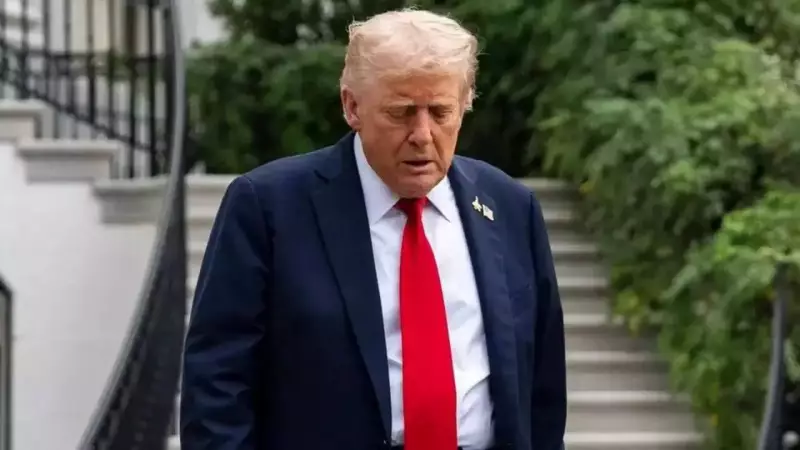
In a significant policy move, the administration of former US President Donald Trump has officially expanded its controversial travel ban. The new rules, set to take effect from January 1, 2026, now restrict entry from a total of 39 countries, with several African nations newly added to the list. The expansion notably bars citizens from these nations from travelling to the United States for tourism or education purposes.
Understanding the Two Tiers of Restrictions
The updated travel ban operates on two levels: a full ban and a partial restriction. A full travel ban, initially covering 12 nations and now expanded, represents the most severe level. It completely blocks entry for individuals from these countries, regardless of their purpose of visit. Exceptions are rare and evaluated on a case-by-case basis.
Under a full ban, new visa applications are not accepted, and existing valid visas are considered suspended. However, it is crucial to note that this policy does not revoke the US citizenship of anyone who has already obtained it.

Countries Under a Full Travel Ban
The list of nations subject to a full entry prohibition includes the original 12 and the 7 newly added by Trump:
Original List: Afghanistan, Burma, Chad, Republic of Congo, Equatorial Guinea, Eritrea, Haiti, Iran, Libya, Somalia, Sudan, Yemen.
Newly Added: Burkina Faso, Laos (moved from partial list), Mali, Niger, Sierra Leone (moved from partial list), South Sudan, Syria.
This category also includes foreign nationals who travel using documents issued or endorsed by the Palestinian Authority.
Countries Under Partial Travel Restrictions
The second tier involves partial restrictions. Nationals from these countries cannot travel to the US for leisure or studies. While H-1B and other work visas are not officially suspended, US consular officers have been instructed to reduce the validity period of any visas issued.
The countries on the partial restriction list are: Angola, Antigua and Barbuda, Benin, Burundi, Cote d’Ivoire, Cuba, Dominica, Gabon, The Gambia, Malawi, Mauritania, Nigeria, Senegal, Tanzania, Togo, Tonga, Venezuela, Zambia, and Zimbabwe.
In a minor relief, Turkmenistan saw some restrictions lifted. Its nationals can now apply for B (visitor), F (student), M (vocational student), and J (exchange visitor) category visas.
Exemptions and Critical Exceptions
The sweeping ban does include specific exemptions. Individuals who are already inside the United States on a valid visa on or before January 1, 2026, will not be affected. Their existing visas will not be revoked.
Athletes and coaches travelling for major international events like the World Cup or the Olympics, as determined by the US State Department, are also exempt from these restrictions.
However, the news is particularly harsh for those planning to join family in the US. Prominent immigration attorney Brad Bernstein clarified that fiancé visas (K-1) are being treated like immigrant visas under this proclamation. "So if you are filing for a fiancé in one of the 39 banned countries, they are being treated like spouses of US citizens and they are also banned," Bernstein stated.
This expansion, building on previous iterations of the travel ban, is poised to have profound implications for global mobility, family reunification, and international education, affecting thousands of prospective students and professionals worldwide.