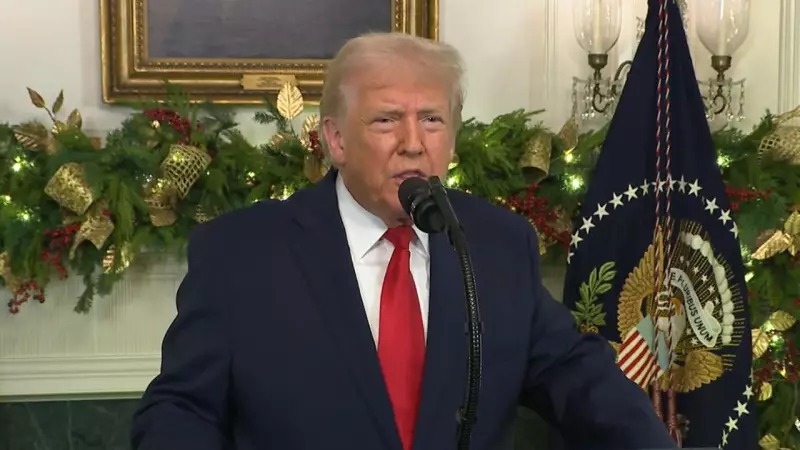
In a sweeping move that redefines America's role on the global stage, President Donald Trump has signed an executive order directing the United States to withdraw from a staggering 66 international organisations, conventions, and treaties. The White House announced the decision on Wednesday, framing it as a necessary step guided by the administration's "America First" policy, arguing that continued participation was "contrary to the interests" of the nation.
A Massive Rollback of Multilateral Engagement
The presidential memorandum, signed on Wednesday, marks one of the most significant pullbacks of US engagement with multilateral institutions in recent years. It targets a total of 35 non-UN organisations and 31 United Nations entities. President Trump has instructed all executive departments and agencies to take immediate steps to enact these withdrawals as swiftly as US law permits. For UN bodies, this process will involve ending American participation and funding.
The decision followed a review of a report from the Secretary of State and consultations with Cabinet members. The administration concluded that US involvement or financial support for these groups was often redundant, wasteful, mismanaged, or misaligned with national priorities. In some instances, officials argued that participation posed a direct threat to US sovereignty and prosperity.

"The Trump Administration has found these institutions to be redundant in their scope, mismanaged, unnecessary, wasteful, poorly run, captured by the interests of actors advancing their own agendas contrary to our own, or a threat to our nation’s sovereignty, freedoms, and general prosperity," the State Department stated.
Key Exits: Climate, Energy, and UN Agencies in Focus
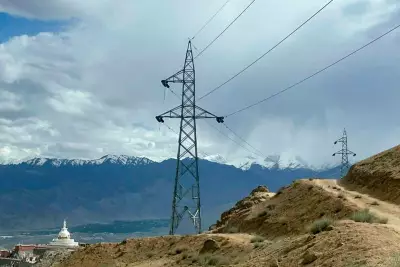
Among the most notable withdrawals are several major climate, environment, and energy-focused bodies. This includes the India- and France-led International Solar Alliance, the Intergovernmental Panel on Climate Change (IPCC), and the International Union for Conservation of Nature (IUCN). Other significant exits include the International Renewable Energy Agency and the International Energy Forum.
On the United Nations front, the US is set to leave agencies dealing with critical global issues like economic development, climate change, gender equality, and population. The list includes heavyweight entities such as the UN Framework Convention on Climate Change (UNFCCC), the UN Population Fund (UNFPA), UN Women, and UN Water.
This move continues a pattern established by the Trump administration. It comes nearly a year after the US withdrew from the World Health Organization (WHO) in January 2025 over pandemic handling and exited UNESCO in July 2025. The administration had also previously suspended support for the UN agency for Palestinian refugees (UNRWA). These actions collectively signal Washington's increasingly selective, "a-la-carte" approach to global cooperation, where engagement is contingent on strict alignment with President Trump's agenda and perceived US interests.
Analysts Warn of Global Consequences and a Shift in World Order
Experts and former officials have raised alarms about the potential global fallout from this decision, particularly concerning cooperation on climate change, public health, and development. Scientists fear the US exit from climate bodies could critically slow international efforts to reduce greenhouse gas emissions and tackle extreme weather.
"The US withdrawal could hinder global efforts to curb greenhouse gases because it gives other nations the excuse to delay their own actions and commitments," cautioned Stanford University climate scientist Rob Jackson.
Analysts interpret this as a crystallization of a new US stance on multilateralism. "I think what we’re seeing is the crystallization of the US approach to multilateralism, which is 'my way or the highway.' It's a very clear vision of wanting international cooperation on Washington’s own terms," said Daniel Forti of the International Crisis Group.

Despite this broad disengagement, US officials indicated that Washington will maintain selective participation in global institutions where it sees strategic competition with China as a priority, such as in telecommunications, maritime, and labour-related forums.
The list of affected organisations is extensive. Non-UN bodies include the Global Counterterrorism Forum, the Freedom Online Coalition, and the International Institute for Democracy and Electoral Assistance. Key UN entities on the exit list encompass the UN Conference on Trade and Development, the Peacebuilding Commission, and the International Law Commission.