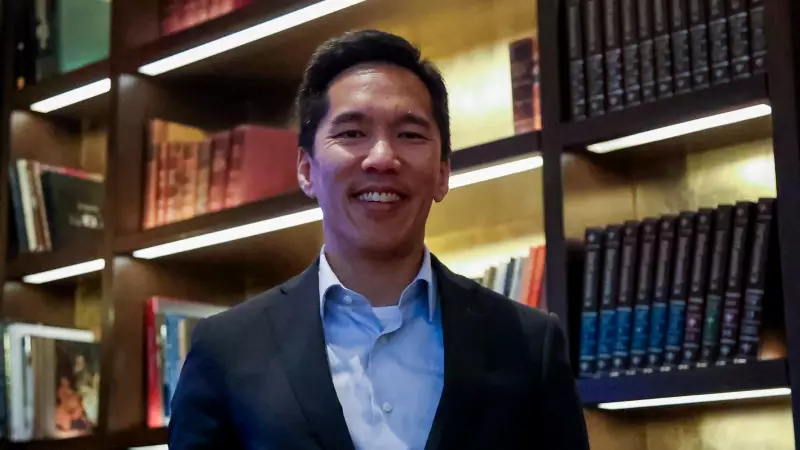
In a candid conversation with The Indian Express during his recent visit to India, University of Southern California (USC) Interim President Beong-Soo Kim addressed the multifaceted challenges and opportunities facing global higher education. Appointed in July 2025, Kim emphasized navigating federal research cuts, immigration anxieties, and campus discourse by adhering to core institutional values.
Sustaining the Indian Connection and Managing Uncertainty
Kim, whose parents were international students from Korea, underscored the profound importance of Indian students to USC's ecosystem. He revealed that the university boasts over 6,000 alumni in India and that the current international student enrollment has seen only a minor dip of about 3 percent despite broader policy uncertainties.
"The United States has benefited greatly from being a beacon to international students, including students from India," Kim stated. He acknowledged anxieties around visas and post-graduation stays but expressed optimism about the enduring value of talent exchange between democracies. His direct message to prospective students was clear: "Apply to USC." He assured that the university's strong global brand and professional networks work diligently to support admitted students through logistical challenges.

Navigating Federal Volatility and Internal Restructuring
Addressing concerns about proposed federal research cuts under the Trump administration, Kim noted that USC's research grants have remained resilient, even trending upward. He credited this to diversifying funding sources beyond federal agencies, focusing on priority areas like Alzheimer's research and trustworthy AI, and avoiding the controversies over anti-Semitism that have entangled some peer institutions.
On the operational front, Kim confirmed difficult decisions were made to ensure long-term sustainability. The university implemented layoffs affecting approximately 1,000 individuals, or around 3% of its workforce, a move he described as aligning with private-sector practices to "bend the cost curve" and reinvest in academic missions.
AI in Classrooms: Literacy Over Bans
A significant portion of the dialogue focused on the transformative impact of Artificial Intelligence. Kim revealed that USC has established an AI Strategy Committee and is moving away from the idea of banning AI tools. "There’s broad recognition that banning AI doesn’t work," he said. The goal is to ensure every graduate achieves AI literacy pertinent to their field.
However, he cautioned against misuse that undermines learning. "If people use AI to write papers, they won’t learn critical thinking skills," Kim explained. The university is exploring pedagogical shifts, such as emphasizing the writing process over the final product and even considering a return to handwritten exams in some courses. He framed this as a pivotal moment to refocus education on dealing with ambiguity, critical analysis, and the liberal arts.
Free Speech, Protests, and the "Open Dialogue Project"
Kim firmly articulated his stance on campus discourse, drawing a line between free expression and rule-breaking. "Lawful protests are fine, but free speech doesn’t mean you can break rules," he asserted, referencing events like the hosting of controversial speaker Charlie Kirk. He believed such engagements, where hundreds of students debated, represented the ideal university environment.
To institutionalize this culture, he launched the Open Dialogue Project after becoming interim president. Led by researcher Neeraj Sood, the initiative aims to create a campus culture where diverse viewpoints are not just tolerated but embraced, moving beyond mere policy compliance.
Reflecting on past campus tensions, including the cancellation of the 2024 main commencement, Kim defended USC's approach. "Universities need to enforce rules consistently and uniformly," he said, arguing that actions like blocking access or vandalism cross a line, but lawful protest does not.

President Kim concluded by outlining his forward-looking priorities: advancing innovation in medical research and AI, deepening collaborations with Indian institutions like the IITs and Reliance Foundation Hospital, and ensuring the enduring value and values of a USC education.