

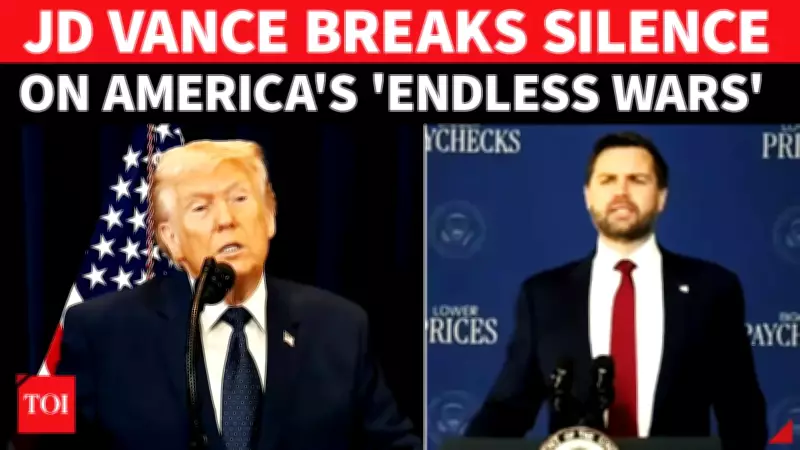
JD Vance Breaks Silence on Iran War Differences with Trump
Vice President JD Vance has publicly addressed the reported differences with former President Donald Trump regarding U.S. policy toward Iran, firmly stating that he will not reveal the details of their classified discussions. Speaking to reporters in Rocky Mount, North Carolina, on Friday, Vance emphasized the confidentiality of conversations held in the White House Situation Room.
Classified Discussions Remain Confidential
When pressed by reporters about the advice he gave Trump concerning potential U.S. strikes on Iran, Vance declined to provide specifics. "I hate to disappoint you, but I'm not going to show up here and in front of God and everybody else and tell you exactly what I said in that classified room," Vance asserted. This statement underscores the sensitive nature of national security deliberations, which are often kept under wraps to protect strategic interests.
Vance's remarks come at a time when multiple reports have surfaced, highlighting apparent divisions between him and Trump over how to handle Iran. These reports suggest that Vance, who has historically opposed prolonged U.S. involvement in foreign conflicts, may have advocated for a more restrained approach compared to Trump's potentially aggressive stance.

Background of Vance's Foreign Policy Stance
JD Vance has been a vocal critic of extensive U.S. military engagements abroad, a position that aligns with his broader political philosophy. His reluctance to engage in prolonged conflicts is well-documented, and this recent episode with Iran appears to be a continuation of that stance. The emergence of these differences raises questions about the internal dynamics within the Trump administration and how such disagreements might influence future U.S. foreign policy decisions.
The timing of Vance's comments is particularly significant, as tensions between the U.S. and Iran have been escalating. Recent incidents, such as alleged Iranian attacks on U.S. military assets and threats against American and Israeli interests, have kept the region on edge. Vance's insistence on keeping the discussions classified may be an attempt to maintain diplomatic flexibility and avoid further inflaming an already volatile situation.
Implications for U.S.-Iran Relations
The reported differences between Vance and Trump could have far-reaching implications for U.S. strategy in the Middle East. If Vance's more cautious approach prevails, it might lead to a de-escalation of hostilities. Conversely, if Trump's perspective dominates, the U.S. could pursue a more confrontational path. The classified nature of these talks means that the public may never know the full extent of the advice given or the arguments made behind closed doors.
This development also highlights the broader challenges of managing foreign policy in a highly polarized political environment. As vice president, Vance's role in shaping U.S. actions is crucial, and his public silence on the matter, while frustrating to some, is a standard practice for protecting national security interests. The ongoing reports of division suggest that the debate over how to handle Iran is far from settled within the highest levels of U.S. leadership.






