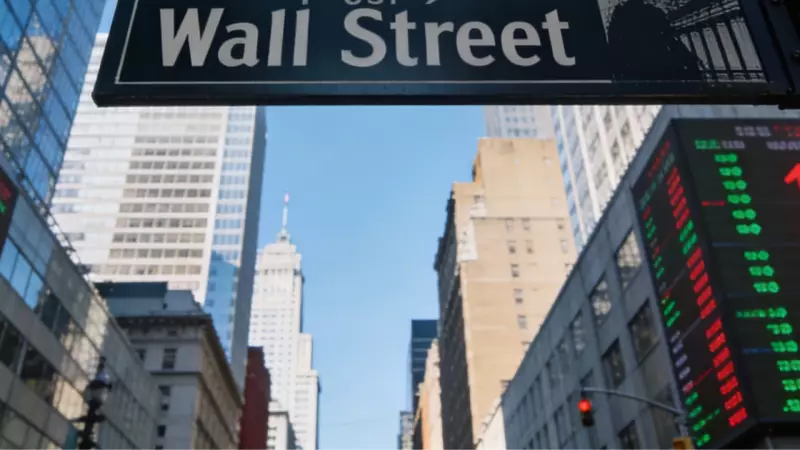
US stock markets exhibited a muted performance on Tuesday, caught in a holding pattern as conflicting economic indicators offered little direction on the future course of interest rates. Early trading saw key indices hovering near flat lines, reflecting investor indecision.
Economic Data Presents a Mixed Picture
At 9:35 a.m. Eastern time, the Dow Jones Industrial Average was down a marginal 4 points. The S&P 500 dipped 0.1%, staying just below its recent peak, while the Nasdaq composite fell 0.2%. The market's hesitation stemmed from a batch of economic reports that told two different stories.
Data revealed that while the US economy added more jobs than anticipated, the unemployment rate climbed to its highest level since 2021. In a separate positive sign, retail sales growth for October surpassed economists' forecasts. This contradictory information initially pushed Treasury yields lower, as investors speculated the Federal Reserve might focus more on rising unemployment, potentially leading to further interest rate cuts in 2026. However, yields later seesawed, ending the day with little change.

The 10-year Treasury yield held steady at 4.18%, identical to Monday's closing figure. The two-year yield, a gauge of Fed policy expectations, edged down slightly to 3.50% from 3.51%. Market experts cautioned that a recent government shutdown may have affected the reliability of Tuesday's data.
AI Stocks and Corporate Moves in Focus
Stocks linked to artificial intelligence continued their uneven performance. Oracle gained 1.1% and Broadcom advanced 1.6%, recovering from prior losses. On the downside, Nvidia slipped 0.2% and CoreWeave dropped 2.4%. The sector remains under scrutiny, with persistent questions about whether massive corporate investments in AI will deliver adequate returns and productivity gains.
In other corporate developments, Kraft Heinz shares rose 1.2% after the company named Steve Cahillane, former Kellanova CEO, as its new chief executive effective January 1. Separately, Pfizer's stock fell 1.6% following its revenue forecast for the coming year, which aligned with analyst projections.
All Eyes on the Federal Reserve's Next Steps
The direction of interest rates remains the dominant force on Wall Street, as lower rates can stimulate economic activity and boost asset values, albeit with inflationary risks. The market's immediate focus is now on an upcoming inflation report scheduled for Thursday, which is expected to show consumer price increases remaining stubbornly above the Fed's target.
According to Kay Haigh, global co-head of fixed income and liquidity solutions at Goldman Sachs Asset Management, the December employment report, due in early January, will be a far more critical indicator for the Fed in determining its near-term policy trajectory. This report will provide clearer signals ahead of the central bank's next policy meeting, offering much-needed clarity to a market currently navigating through foggy economic data.