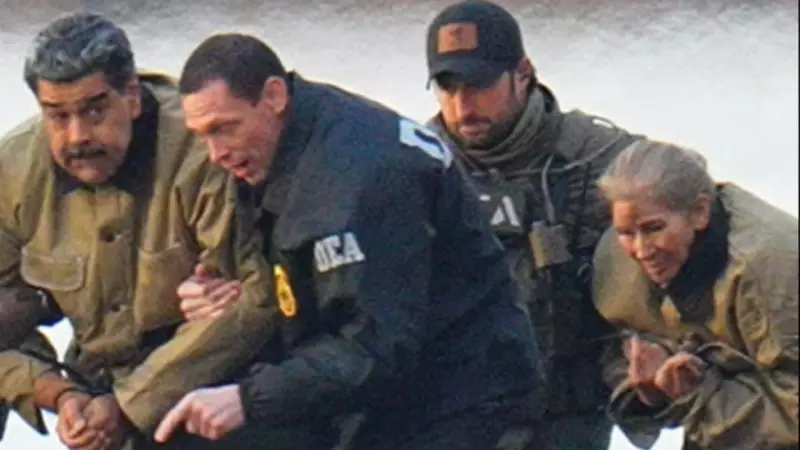
White House press secretary Karoline Leavitt has ignited a significant controversy online after amplifying an unverified social media post. The post made startling allegations about the United States using a mysterious sonic weapon during a military operation in Venezuela.
Unverified Claims of a 'Massacre' and a Mysterious Weapon
The incident centers on a post shared by Leavitt on the platform X. She urged her followers to pay close attention, writing, "Stop what you are doing and read this." The content she reshared presented an interview-style narrative from an individual identified as a Venezuelan security guard loyal to President Nicolás Maduro.
This account described the raid, which reportedly took place on 3 January 2026, as swift and devastating. The guard claimed Venezuelan radar systems failed suddenly, allowing drones and helicopters to overwhelm their position. He repeatedly labeled the event a "massacre."

The most explosive claim involved a new type of armament. The guard alleged that a small team of about twenty highly advanced US troops deployed a device that emitted an "intense sound wave." He described feeling as though his head was "exploding from the inside." The effect, according to him, was immediate and gruesome, with soldiers around him bleeding from their noses and vomiting blood.
He further stated that this small US unit fired at an extraordinary rate of roughly 300 rounds per minute, killing hundreds of Venezuelan soldiers while suffering no casualties themselves. "They didn't look like anything we've fought against before," the guard was quoted as saying.
Netizens Dismiss 'Sci-Fi' Narrative and Question Motives
The online reaction to Leavitt's decision to share these claims was swift and largely skeptical. Many users on social media platforms questioned the credibility of the story and the press secretary's intent in promoting it.
A wave of criticism labeled the account as implausible and politically motivated. One user directly called the claims "sci-fi," while another mocked the narrative by sarcastically asking if they were "fairy tales about the space wars." A third critic suggested the story sounded like "MAGA fanfic," implying it served a specific political narrative.
Others drew comparisons to recent US military history to highlight the perceived improbability. One netizen pointedly asked, "So what didn’t work in Afghanistan, was there no power outlet there? Or why did they spend tens of billions of dollars and then run away?" This comment reflected a broader sentiment of disbelief, contrasting the alleged high-tech, flawless operation in Venezuela with the complex and protracted conflict in Afghanistan.
Credibility and the Role of Official Channels
The core issue raised by critics is not just the outlandish nature of the sonic weapon claims, which remain completely unverified by any independent source. The larger concern focuses on why a senior White House communications official would choose to amplify such an unsubstantiated account.
This action has led to serious questions about whether the post was shared to reflect a perceived battlefield reality or to advance a specific political narrative. The episode underscores the challenges and responsibilities faced by public figures in an era where social media can instantly spread unchecked information.
As of now, there has been no official confirmation or denial from the US government regarding the specific tactics described in the viral post. The story, however, continues to fuel debate online about military transparency, disinformation, and the powerful role of digital platforms in shaping geopolitical discourse.