As a firestorm of criticism continues over former President Donald Trump's derogatory description of Somali immigrants, a top White House official has stepped forward to defend the remarks. The controversy has ignited a fresh debate on immigration enforcement and rhetoric in the United States.
White House Official Backs Trump's Controversial Stance
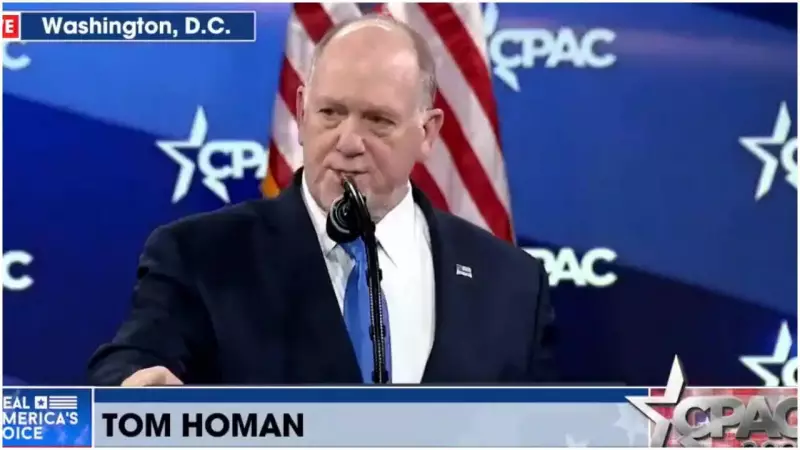
White House border czar Tom Homan came to Trump's defence amidst the uproar. On Sunday, Homan addressed the issue on CNN's 'State of the Union' programme. While he claimed he was unaware of Trump's specific thinking, he stated, "I agree with President Trump. From day one, he has said we are concentrated on public safety threats and national security threats."
Homan asserted that a significant illegal Somali community resides in Minnesota, contradicting local officials who maintain the vast majority of Somalis in the US are American citizens. He provided no evidence for this claim. "We're going to arrest every illegal alien that we find there," Homan declared, referring to enforcement actions.

ICE Denials and Community Backlash
Homan firmly denied that US Immigration and Customs Enforcement (ICE) had intensified its deportation campaign in the Minneapolis-St. Paul area specifically because of Trump's comments. He insisted that ICE agents do not target individuals based on their appearance.
The most prominent voice from the affected community, US Representative Ilhan Omar, slammed the former President's language. On CBS's 'Face the Nation', Omar, a Somali-American Democrat from Minnesota, called the remarks "completely disgusting." She emphasized, "These are Americans that he is calling garbage, and we feel like there is an unhealthy obsession that he has on the Somali community and an unhealthy and creepy obsession that he has with me."
Approximately 80,000 Somalis live in Minnesota, primarily in the Twin Cities metro region. Minneapolis Mayor Jacob Frey has clarified that most are US citizens. Many arrived as refugees fleeing Somalia's devastating civil war, which began in 1991, with the US starting to issue visas to Somali refugees in 1992.
Political Reactions and the Path Forward
While Trump's hardline immigration stance has generally found support among Republicans controlling Congress, some voices expressed concern. US Senator John Curtis, a Republican from Utah, noted on Sunday that a lack of transparency in ICE operations fosters unnecessary fear in communities. "I think that to the extent that ICE is not transparent, it brings this fear into a community, and we've got to get rid of that fear," he told CNN.
When asked about Trump's disparaging words, Senator Curtis advocated for a more welcoming approach. He suggested a deliberate effort to make immigrants feel welcome and improve life in America, stating, "If more of us would do that, it would matter less what an individual said."
The episode underscores the deep divisions in American politics over immigration, where heated rhetoric often clashes with the complex realities of migrant communities who have built lives in the United States over decades.