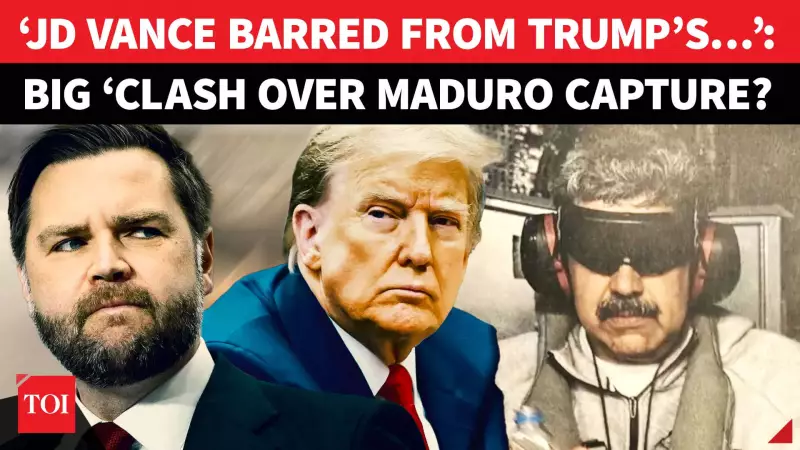
The White House has issued a firm rebuttal to swirling allegations that Vice President J.D. Vance was not present during the critical, high-stakes operation targeting Venezuelan leader Nicolás Maduro. The controversy erupted after Vance was notably absent from President Trump's public briefings and late-night strategy sessions as the mission unfolded.
Behind-the-Scenes Engagement vs. Public Absence
Despite his conspicuous low profile in the public eye, senior administration officials are pushing back hard. They insist that Vice President Vance was fully engaged and involved in the operation, but through secure, behind-the-scenes communication channels. The narrative of his absence, according to the White House, is fundamentally inaccurate.
Press Secretary Karoline Leavitt directly addressed the reports, dismissing questions about Vance's role as based on "fake" information. She emphasized that the Vice President's responsibilities during sensitive national security events often require discretion and are not always visible to the public or media.

Fuel for Speculation and Internal Debate
However, the Vice President's lack of visibility during such a significant event has inevitably fueled intense speculation. Political observers and analysts suggest that his absence from the public-facing aspects of the crisis management points to possible internal debates or differing viewpoints at the highest levels of the Trump administration.
The operation itself, which involved the capture of a second Venezuela-linked ship following the seizure of a Russian oil tanker, has been a major flashpoint. The situation has drawn sharp international reactions and placed the U.S. administration's foreign policy under a microscope.
The Official Stance and Unanswered Questions
The White House's official stance remains unequivocal: J.D. Vance was an active participant in the Venezuela operation. The administration is attempting to shut down any narrative that suggests otherwise, framing it as misinformation.
Yet, the episode raises broader questions about the internal dynamics of the administration during military and diplomatic crises. The contrast between the private assurances of involvement and the public absence continues to be a topic of discussion in Washington circles. The incident, dated January 8, 2026, adds another layer to the complex foreign policy challenges facing the United States.