For years, former US President Donald Trump criticised Democrats for altering the character of American cities. This week, his fresh attacks on Somali immigrants in Minnesota have reignited a national debate. A key question has resurfaced: why does a cold Midwestern state host the largest Somali population in the United States? The answer is not accidental. It is a compelling mix of history, conflict, employment, cultural alignment, and the powerful chain of word-of-mouth.
The Spark: Political Rhetoric Puts Community in Spotlight
Minnesota's robust Somali community, nearly 80,000 strong, finds itself under intense scrutiny once again. This follows remarks by Donald Trump, who labelled Somali immigrants as "garbage" and suggested they be sent back. He also threatened to withdraw temporary legal protections. Conservative commentators have further fuelled attacks by linking the entire community to isolated welfare-fraud cases. With reports of new immigration enforcement operations planned in the state, Somali Minnesotans express feeling targeted and anxious.
The Roots: War, Refuge, and a Meat-Packing Plant
The story begins far from the urban centres, in the late 1990s, in Marshall, Minnesota. Somalia was ravaged by a devastating civil war, displacing hundreds of thousands. Simultaneously, a meat-packing plant in Marshall needed workers. The earliest Somali refugees seized this opportunity, finding steady employment there. News of these jobs spread rapidly through refugee networks. More families followed, attracted not only by the plant but also by work in local hotels, taxi services, and businesses. This initial cluster planted the seeds of Minnesota's first Somali community, long before the Twin Cities emerged as the primary hub.

The Growth: Chain Migration and Cultural Compatibility
A powerful pattern of chain migration took hold. As pioneer workers settled, they brought their families. Families raised children who attended schools, establishing the next generation. This created a supportive ecosystem for new arrivals. They found relatives, friends, interpreters, mosques, halal shops, and social networks ready to assist. The community became self-reinforcing: the more Somalis arrived, the easier Minnesota became as a choice over other US states.
Crucially, Minnesota's social fabric played a defining role. Many Somalis reference the concept of martisoor, meaning hospitality. They found Minnesota's progressive, community-oriented, and practical political culture to be surprisingly compatible with Somali social values. Navigating schools, healthcare, and local services was often easier here than elsewhere. This alignment fostered a profound sense of belonging that extended beyond mere economic survival.
The Hub: The Twin Cities Ecosystem and Political Rise
By the early 2000s, Minneapolis and St. Paul became the undeniable gravitational centre. Neighbourhoods like Cedar-Riverside developed full-fledged Somali ecosystems with groceries, restaurants, community centres, and legal clinics. This infrastructure provided stability for newcomers and a secure space for second-generation identity formation. Today, about 78 percent of Minnesota's Somali population resides in the Twin Cities metro area.
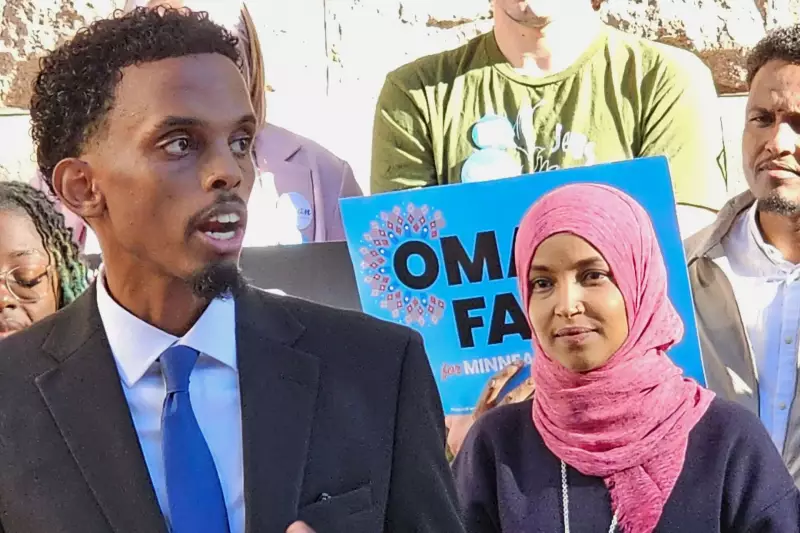
The journey included significant challenges, from workplace accommodation for religious practices to battling stigma after past extremist recruitment attempts. However, resilience prevailed. A monumental turning point came in 2018 when Ilhan Omar, a former refugee, was elected as the first Somali-American to the US Congress. For the community, this was a powerful symbol of permanence and political integration.
Community leaders today highlight substantial contributions across local business, transport, healthcare, and education. The story of Somali Minnesota is not one of a government programme, but of circumstance, opportunity, and relentless community resilience. From one hiring decision in Marshall to a generation building upon the last, Somali Minnesotans are now deeply embedded in the state's identity. As national rhetoric intensifies, understanding this real story of how they arrived and why they stayed has never been more critical.