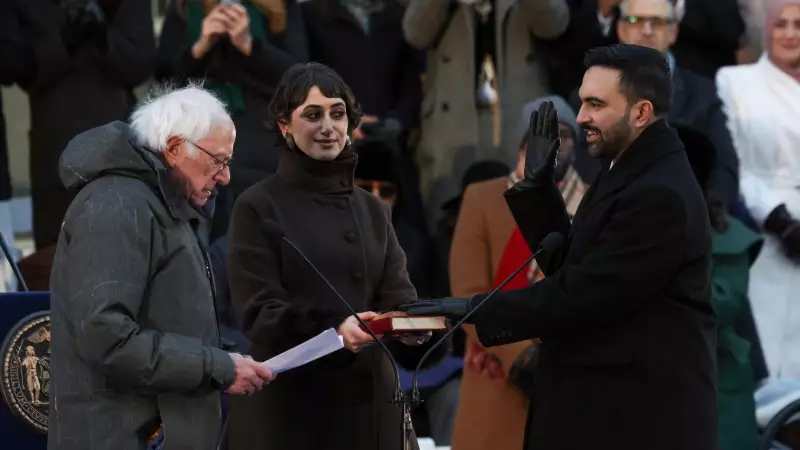
In a landmark ceremony at New York's City Hall, Zohran Kwame Mamdani officially took the oath of office, becoming the city's new Mayor. The historic event, held on a significant day for the city's governance, marks a new chapter in the political landscape of one of the world's most prominent urban centres.
A Ceremony Steeped in Symbolism and Support
The swearing-in was a momentous occasion attended by a host of dignitaries, supporters, and family members. Presiding over the ceremony was New York State Supreme Court Justice Lyle Frank, who administered the oath. The event was notably witnessed by Mamdani's father, the celebrated Ugandan-born academic and author Mahmood Mamdani, whose work has profoundly influenced post-colonial studies.
Following the formal oath, the new Mayor addressed the gathered crowd, outlining his core priorities and the philosophy that will guide his administration. His speech resonated with themes of collective action and ambitious reform, setting a clear tone for his upcoming term.

Key Priorities and Pledges for New York City
In his inaugural address, Mayor Mamdani laid out a focused agenda aimed at tackling some of New York's most pressing challenges. He made several key pledges that are expected to define the early days of his leadership:
- Housing as a Human Right: A central pillar of his platform is a radical approach to the housing crisis. Mamdani vowed to "seize vacant luxury apartments" and convert them into homes for the city's homeless population. This bold policy proposal immediately signals a departure from traditional real estate approaches.
- Transportation Revolution: The Mayor committed to making public transit free for all New Yorkers. This initiative aims to reduce traffic congestion, lower the cost of living, and promote a more equitable and environmentally friendly city.
- Reimagining Public Safety: Aligning with broader progressive movements, Mamdani pledged to "defund the police." He articulated a vision to reallocate significant portions of the police department's budget towards community-based services, social programs, and mental health resources, aiming to address the root causes of crime.
These promises collectively represent a progressive overhaul of city policy, drawing inspiration from movements that have gained traction in urban politics across the United States.
The Path to City Hall and Political Identity
Zohran Mamdani's journey to the mayor's office is itself a notable narrative. Before his foray into electoral politics, he worked as a housing counselor in Queens, an experience that directly informed his passionate stance on the city's affordability and homelessness issues.
His political identity is firmly rooted within the Democratic Socialists of America (DSA). His successful campaign and subsequent victory are viewed as a significant win for the DSA, demonstrating the growing influence of socialist policies in mainstream American urban governance. His election is part of a wave of progressive candidates winning office in major US cities, advocating for transformative economic and social policies.
Implications and the Road Ahead
The swearing-in of Zohran Mamdani is more than a routine political transition; it is a potential turning point for New York City. His policy agenda, if implemented, would constitute one of the most dramatic shifts in the city's governance in decades.
However, the path forward is fraught with challenges. The ambitious plans to redefine housing, transportation, and public safety will require navigating complex city bureaucracies, securing funding, and building coalitions within the city council. They are also likely to face staunch opposition from real estate interests, police unions, and more moderate political factions.

As the son of a globally respected intellectual, Mamdani brings a unique perspective to the role, blending grassroots activism with a deep, theoretical understanding of power structures and inequality. The world will be watching closely to see how his bold vision translates into tangible change for the millions of people who call New York City home. His administration begins with high expectations from his base and significant skepticism from his critics, setting the stage for a dynamic and closely watched term in office.