

In a historic moment laden with symbolism, New York City ushered in a new era at midnight on New Year's Day 2026. Zohran Mamdani, aged 34, was sworn in as the 112th mayor of the United States' largest metropolis, shattering multiple barriers and setting a new course for the city's future.
A Ceremony Steeped in Symbolism and Firsts
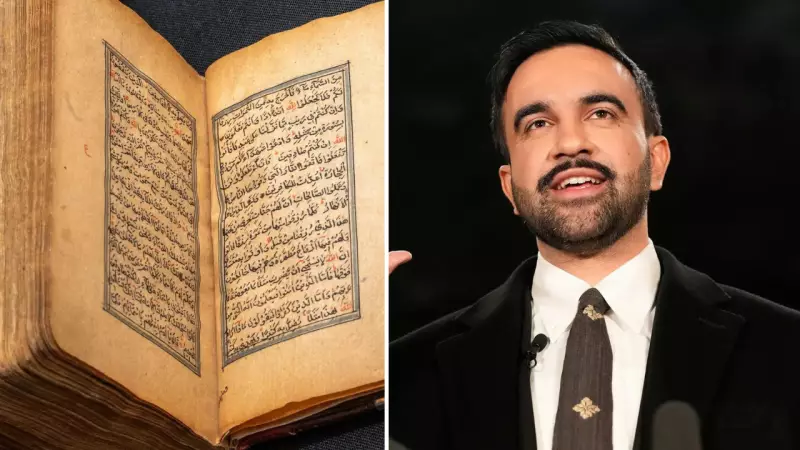
The inauguration was deliberately crafted to convey a powerful message. Mamdani took his initial, private oath of office in the decommissioned Old City Hall subway station, a Gilded Age relic closed since 1945. With his hand placed on two Qurans held by his Syrian-origin wife, Ruma Duwaji, he claimed a cascade of historic firsts. Mamdani is now the youngest mayor in New York City history, the first Muslim to hold the office, the first person of Indian origin, and the first African-born New Yorker to lead the city. He was born in Kampala, Uganda.
The oath was administered by New York Attorney General Letitia James, a noted figure in progressive politics. This pairing immediately signaled the confrontational and unapologetically progressive tenor of the incoming administration. Later on Thursday, a public swearing-in on the steps of City Hall, officiated by U.S. Senator Bernie Sanders and featuring Congresswoman Alexandria Ocasio-Cortez, turned into a jubilant block party, celebrating the rise of a new political movement.

Defying the Odds: A Left-Wing Path to Victory
Mamdani's ascent to the city's highest office defied all conventional political wisdom. He began his mayoral race as a marginal figure, polling below one percent. A third-term Assembly member from Astoria, Queens, he ran an unambiguous left-wing campaign focused on pressing issues of affordability: rent freezes, universal childcare, and expanded public transit. This platform tapped into a deep reservoir of frustration with political centrism.
His path to victory was nothing short of monumental. Mamdani defeated former governor Andrew Cuomo twice—first in the June Democratic primary, and again in the general election after Cuomo launched an independent bid. This was seen as a clear repudiation of a transactional and exhausted style of politics that had long dominated New York.
Reclaiming Narrative and Facing the Future
The religious symbolism of the day was particularly striking for a city that endured virulent anti-Muslim sentiment after the September 11 attacks. The use of Qurans, including a family heirloom and a centuries-old volume once owned by historian Arturo Schomburg, felt to many like an act of civic reclamation. It marked a passage from years of mourning and suspicion back toward pluralism and shared power.
From an international perspective, especially for diasporas from the Indian subcontinent and Africa, Mamdani's victory resonates powerfully. For decades, the identity of the Muslim immigrant in New York was often viewed through a lens of national security. Today, that composite identity—Indian, African, American, Muslim—occupies the city's highest office.
New York now entrusts Mamdani with tackling its most urgent challenges: a punishing housing crisis, an aging subway system, and a widening wealth gap. While his success will ultimately be judged by governance, his inauguration has already etched itself into history. It represents a moment when New York, once defined globally by an act of terror, chose reinvention over fear and transformation over the darkest confines of memory.






