
CJI on Integrity as Legal Profession's Foundation
CJI Justice Surya Kant emphasizes integrity as essential for legal profession survival amid digital challenges. He draws constitutional parallels with traditional khaat at Sonipat event.

CJI Justice Surya Kant emphasizes integrity as essential for legal profession survival amid digital challenges. He draws constitutional parallels with traditional khaat at Sonipat event.
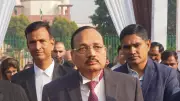
Chief Justice of India Surya Kant hails the basic structure doctrine as the conscience of Indian democracy, preventing absolutism. A profound affirmation of constitutionalism.

District court upholds municipal court decision ordering demolition of Sanjauli mosque illegal structure by December 30. Waqf Board's challenge rejected.

Learn why the Basic Structure Doctrine is crucial for UPSC exams and how the 23rd Law Commission views simultaneous elections. Essential reading for competitive exams.

Former Supreme Court Justice Abhay Oka emphasizes Basic Structure doctrine's role in protecting Indian democracy on Constitution Day 2025. Calls for Constitution as independent school subject.

SBI Research warns new labour code could reduce take-home salary as basic pay must be 50% of CTC, increasing retirement benefits. Learn how this affects employees.

Ludhiana manufacturers face a working capital crisis due to prolonged GST refund delays exacerbated by a steep inverted duty structure. Industry demands an automated system for timely refunds to prevent business closures.

GST Council addresses inverted duty anomalies affecting industries like textiles and railways. Learn how this impacts businesses and the economy. Read more about GST reforms.

Discover how digital flexi-benefit cards are revolutionizing salary structures in India. Employees save taxes while employers reduce compliance burden. Learn about tax-free allowances and smart salary packaging.

India's new labour codes redefine wages, potentially increasing social security contributions for employers and employees. Deloitte analysis shows possible reduction in take-home pay while expanding worker benefits.

Security heightened at Shimla's Sanjauli mosque declared illegal by courts. Dev Bhoomi Samiti demands utility disconnection, threatens protest. Police ensure law and order.

Punjab CM Bhagwant Mann demanded transfer of Chandigarh to Punjab, raised river water issues, and advocated for genuine federal structure at Northern Zonal Council meeting chaired by Amit Shah.

Exclusive: Kings' College Professor Prabha Kotiswaran reveals how Karnataka's Gruha Lakshmi scheme is reshaping marital dynamics and challenging patriarchal structures through women's financial empowerment.
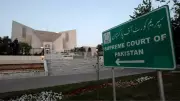
Pakistan's new 27th constitutional amendment, tabled amid secrecy, reshapes the judiciary. Analysts warn this signals democratic regression and growing authoritarian control. Explore the implications for governance.

Explore how James Watson's DNA double helix discovery revolutionized biology, medicine, and agriculture. Learn about the lasting impact of this scientific breakthrough.

Explore how Mumbai's mayor role compares to New York City's powerful executive model and why governance reform could transform India's financial capital.

Controversial affidavit proposes sweeping changes to Panjab University's 75-year governance structure, triggering protests from faculty and student bodies who call it an attack on institutional autonomy.

Nithin Kamath explains why India's unique tax advantages are creating unprecedented IPO momentum and transforming the investment landscape for retail investors.

In a significant development, the Shimla District Court has stayed the demolition of Sanjauli Mosque and issued a show-cause notice to the Municipal Commissioner. The court has demanded a personal appearance and explanation for the controversial demolitio
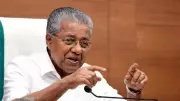
Kerala Chief Minister Pinarayi Vijayan strongly criticizes Election Commission's Systematic Voters' Education and Electoral Participation (SIR) program, calling it a threat to Indian democracy and federal structure.

Discover how the BJP's organizational structure and leadership selection process differ fundamentally from traditional dynastic parties, reshaping Indian politics through meritocracy and ideological commitment.

Leading economists propose transformative GST reforms that could boost revenue collection, simplify compliance, and accelerate India's economic growth trajectory.